

The Unitree G1 is the world’s best-selling humanoid robot. Unitree shipped more than 5,500 units in 2025, capturing roughly 32% of the global market (SCMP/Omdia, 2026). Starting from $13,500 direct or $16,000+ through dealers, the G1 costs a fraction of what competitors charge. But does the world’s cheapest production humanoid actually deliver? I’ve analyzed deployment data, teardown specs, and user feedback across research labs and factory floors to find out.
Key Takeaways
- The Unitree G1 starts at $13,500 direct or $16,000+ through dealers and scales to $73,900 (Ultimate D) across 14 configurations, per BotInfo.ai. The Basic model lacks SDK access and cannot be upgraded to EDU hardware.
- Over 5,500 G1 units shipped in 2025, with humanoid robots accounting for over 51% of Unitree’s total revenue (Humanoids Daily, 2026). Institutions include Amazon, Stanford, and MIT.
- Specs range from 23 to 43 degrees of freedom, with walking speeds up to 2 m/s and 1-2 hours of active battery life.
- Unitree filed for a Shanghai IPO in March 2026 seeking up to $610 million (Bloomberg, 2026).
- For research and education use cases, the G1 EDU Standard at $43,500 offers the strongest value. For factory pilots, the $54,900 Pro A with Dex3-1 hands is the minimum viable option.
Table of Contents
What Is the Unitree G1?
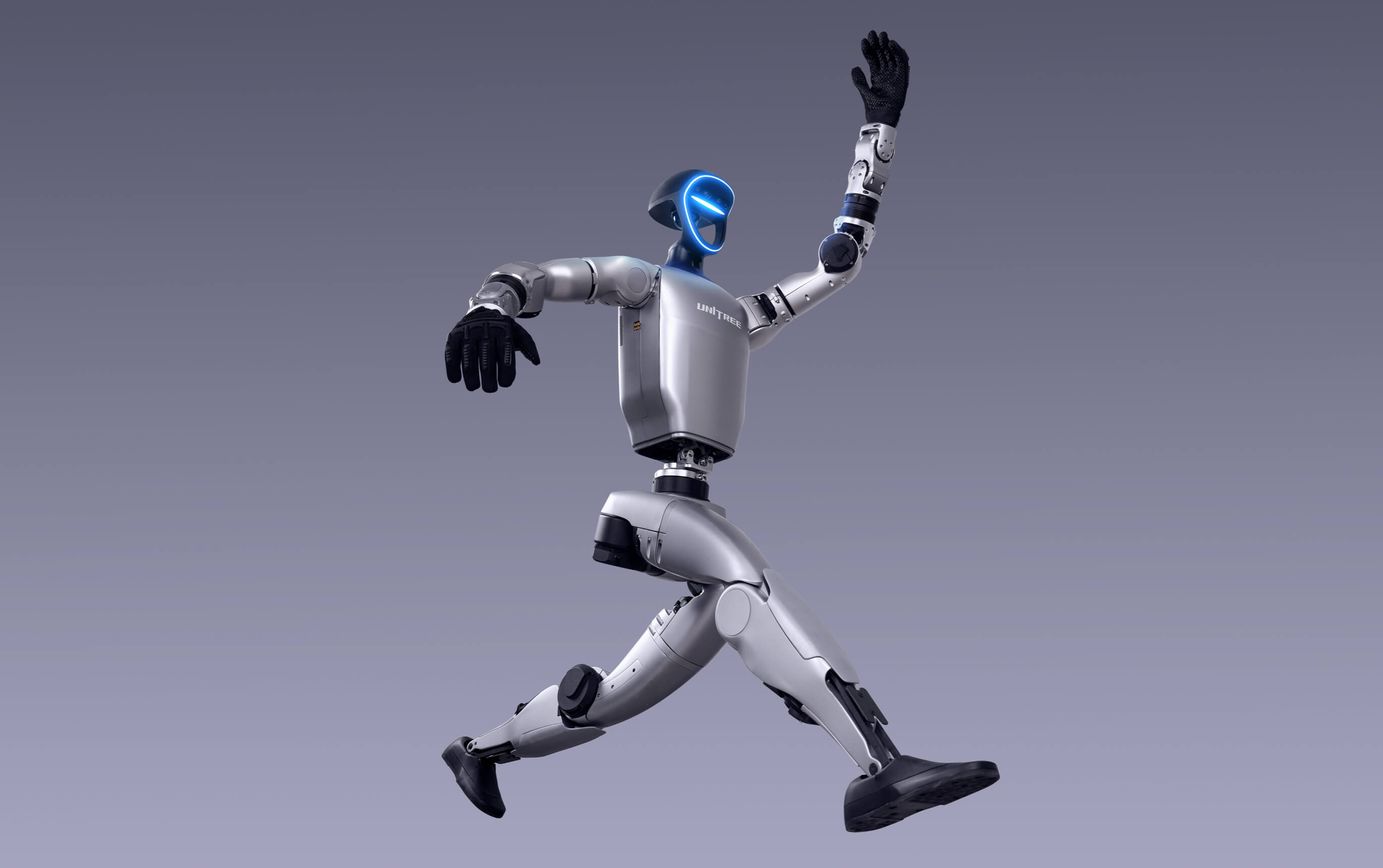
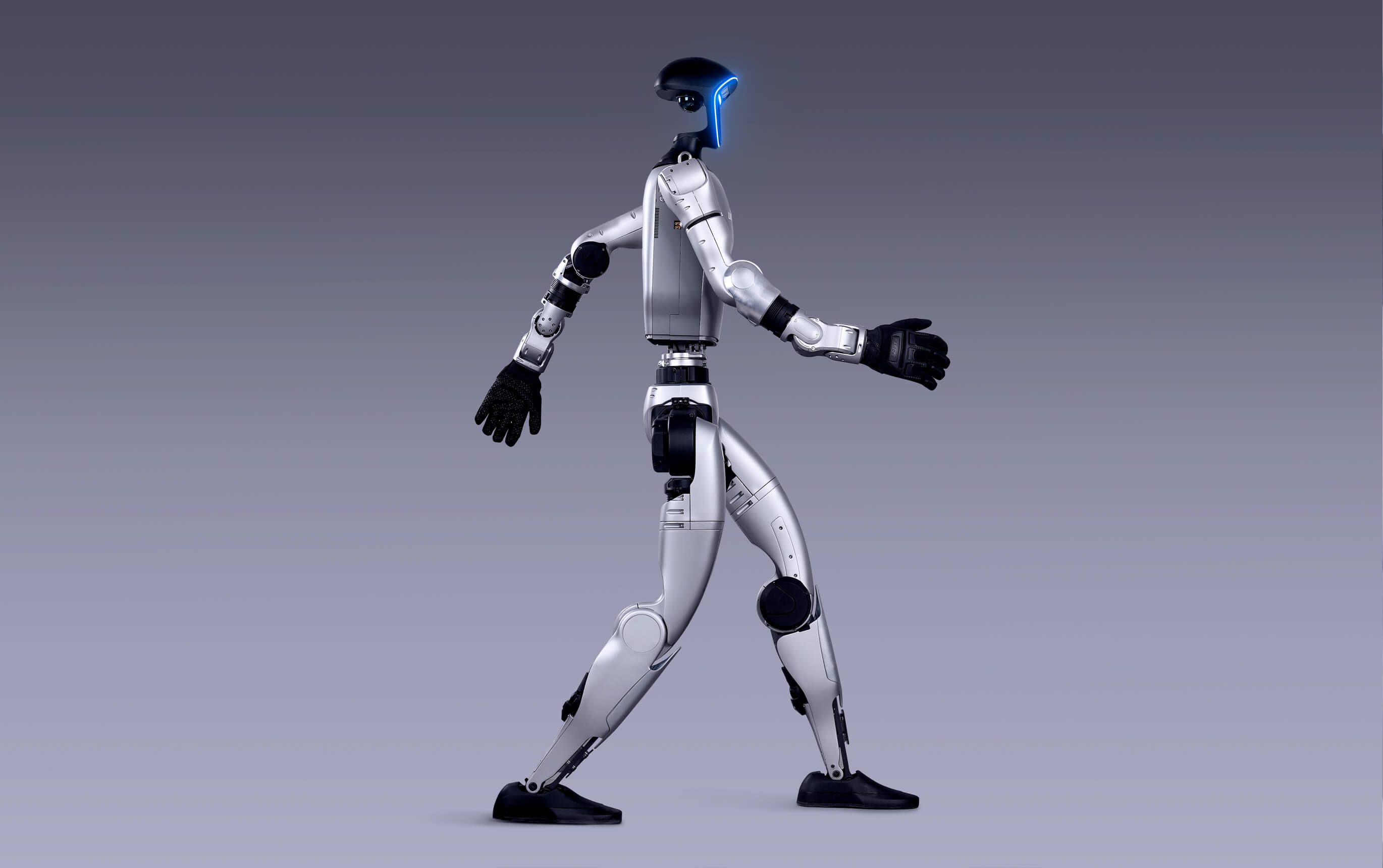
The G1 is Unitree Robotics’ flagship humanoid robot, standing 127-132 cm tall and weighing 35-47 kg depending on configuration. Unitree, headquartered in Hangzhou, China, designed the G1 as a compact bipedal platform for research, education, and light industrial tasks. It’s the most affordable production humanoid you can buy.
What makes the G1 stand out isn’t just price. Unitree uses the same industrial-grade components found in robots costing five times as much: crossed roller bearings, PMSM motors delivering up to 120 N-m of torque, and a LIVOX MID-360 LiDAR for 360-degree mapping. The trade-off? The G1 stands shorter than most adult humans, carries only 2-3 kg per arm, and runs for about two hours before needing a battery swap.
Here’s what matters for buyers: the G1 isn’t trying to replace factory workers. It’s a development platform that happens to be priced like lab equipment rather than industrial machinery. That positioning explains why universities and research labs, not production lines, account for the majority of deployments. For context on what factory-ready humanoids require, see my humanoid robots in manufacturing guide.
How Much Does the Unitree G1 Cost?
The G1’s base price gets the most attention, but actual costs vary dramatically across 14 distinct configurations (BotInfo.ai, 2026). The Unitree online shop lists a direct-order price of $13,500, though this model does not support secondary development and ships without SDK access (Unitree Shop, 2026). Authorized dealer pricing for the Basic model ranges from $16,000 to $21,600 depending on region and distributor. I keep a continuously updated Unitree G1 price tracker with every reported figure, its source, and its verification date.
Here’s how the full pricing breaks down:
| Configuration | Price (USD) | Key Difference |
|---|---|---|
| G1 Basic | $13,500 direct / $16,000-$21,600 dealer | No SDK, 23 DOF, 8-month warranty |
| G1 EDU Standard | $43,500 | Full ROS 2 SDK, Jetson Orin, 18-month warranty |
| EDU Plus | $53,500 | 3-DOF waist added |
| Pro A (Dex3-1 hand) | $54,900 | 3-finger dexterous hand, 30N grip |
| Pro B (Dex3-1 + tactile) | $56,900 | Tactile sensors added to Dex3-1 |
| Pro E (BrainCo 5-finger) | $51,900 | Anthropomorphic 5-finger hand |
| Ultimate A | $65,900 | Dex3-1, maximum 43 DOF |
| Ultimate D | $73,900 | Inspire 5-finger + 17 tactile sensors/hand |
One critical detail most reviews miss: the Basic model cannot be upgraded to EDU. Different motor mounts, wiring harnesses, and compute module slots mean institutions buying Basic units that later need programming capability must purchase entire new EDU units. This makes the $43,500 EDU Standard the true entry point for anyone planning serious development work. For a full breakdown of total ownership costs including deployment and integration, see my humanoid robot cost and ROI guide.
The G1 is also available on Amazon US at $17,990, a convenience premium over the $13,500 direct price but with Prime shipping included (Humanoids Daily, 2026). Direct orders from Unitree add $300-$1,200 for shipping plus customs duties. Lead times run 5-7 business days from authorized dealers.
Get the Verified Robot Price & Deployment Table (September 2026)
32 humanoid robots. Every price checked against the maker’s own order page or filing, no aggregator numbers, plus the honest deployment status for each. Free PDF, updated monthly. Enter your email and the download link appears right here.
What Are the Unitree G1’s Key Specifications?
At 23 degrees of freedom in its base configuration and up to 43 DOF in Ultimate variants, the G1 covers a wide capability range (Unitree, 2026). The EDU models add an NVIDIA Jetson Orin module delivering 100 TOPS of AI compute, a capability the Basic model entirely lacks.
| Specification | G1 Basic | G1 EDU |
|---|---|---|
| Degrees of Freedom | 23 | Up to 43 |
| Height | 127-132 cm | 127-132 cm |
| Weight | 35 kg | 35-47 kg |
| Walking Speed | 2+ m/s | 2+ m/s |
| Joint Torque | 90 N-m | 120 N-m |
| Arm Payload | 2 kg | 3 kg |
| Battery Life | 1-2 hours | 1-2 hours |
| AI Compute | 8-core CPU | Jetson Orin (100 TOPS) |
| SDK Access | No | ROS 2 / Python / C++ |
| LiDAR | LIVOX MID-360 | LIVOX MID-360 |
| Warranty | 8 months | 18 months |
All models share the same sensor suite: 3D LiDAR for 360-degree mapping, Intel RealSense D435 depth camera, RGB camera, 6-axis IMU, foot force sensors, and a 4-microphone array for voice commands. The hot-swap battery design lets you swap cells in under 30 seconds, though you’ll need spares since the 9,000 mAh lithium pack only sustains about 90 minutes of active walking.
What Can the G1 Actually Do in 2026?
Unitree deployed G1 robots on its own production line assembling motor components using the UnifoLM-X1-0 embodied AI model, effectively using robots to build more robots (Humanoids Daily, 2026). The demonstration showed precision assembly tasks at 2x video speed, a transparency measure meant to address skepticism about robot capability claims.
Beyond Unitree’s own facility, deployments span three main categories:
- Research institutions represent the largest customer segment. Amazon’s robotics division, Stanford University, MIT, and UT Austin all operate G1 units for locomotion studies, manipulation research, and human-robot interaction experiments.
- Industrial pilots focus on structured warehouse tasks. ETH Zurich’s Autonomous Systems Lab, for example, uses two G1 Pro units to automate sample transport between wet-lab rooms using RTAB-Map for corridor navigation and Unitree’s motion planning API for waypoint scripting.
- Educational programs use the G1 as a teaching platform. UT Austin’s “Rizzbot” went viral as a demonstration of what student developers can build with the ROS 2 SDK and reinforcement learning tools.
From my analysis of deployment data, an important pattern emerges: the most successful G1 deployments involve structured environments with defined waypoints, not open-ended tasks. The robot handles logistics, sorting, and repetitive material handling well. It struggles with unstructured manipulation or tasks requiring more than 3 kg of arm force.
What you see on YouTube, including backflips, household chores, and complex manipulation, reflects months of custom firmware development, not out-of-box functionality. Every G1 ships with bipedal walking, pre-loaded dance routines, gesture libraries, fall recovery, and remote app control. Everything beyond that requires the EDU model and significant development time.
How Does the G1 Compare to Other Humanoid Robots?
At $13,500 direct from Unitree, the G1 sits at the bottom of the commercial humanoid price spectrum, but it isn’t alone at that price point. AgiBot’s X2 sells for approximately $13,600 while offering a taller 165 cm frame (TechCrunch, 2026). China now accounts for more than 80% of global humanoid robot installations, and the sub-$20,000 segment is where most of that volume lands, a market I map vendor by vendor in my complete guide to humanoid robot companies.
| Robot | Price | DOF | Height | Best For |
|---|---|---|---|---|
| Unitree G1 | $13,500+ | 23-43 | 127 cm | Research, education |
| AgiBot X2 | ~$13,600 | 36 | 165 cm | Factory automation |
| 1X NEO | $20,000 | 30+ | 167 cm | Home assistance |
| NEURA 4NE-1 Mini | ~$21,600 | 29 | 155 cm | Service, hospitality |
| XPeng IRON | ~$150,000+ | 82 | 178 cm | Full-scale industrial |
| Tesla Optimus Gen 3 | $20,000-$30,000* | 40+ | 173 cm | Factory automation |
*Tesla Optimus pricing is projected; units aren’t available for external purchase yet. Tesla has significantly scaled back its passenger car lineup to prioritize Optimus production.
The G1’s main advantages are price, availability, and developer ecosystem. You can order one today and receive it within a week. The AgiBot X2 matches on price but lacks the G1’s community support and ROS 2 integration. The 1X NEO targets home use cases the G1 isn’t designed for.
Where the G1 falls short is physical capability. At 127 cm, it can’t reach standard workbenches. Its 2-3 kg arm payload rules out most material handling jobs. The XPeng IRON, with 82 DOF and human-scale height, represents what a no-compromise industrial humanoid looks like, but at roughly ten times the price.
Unitree G1 vs R1: Which Should You Buy?
Unitree launched the R1 in July 2025 at $4,900-$5,900, making it the cheapest humanoid robot from any major manufacturer (Unitree, 2025). TIME Magazine named it one of the Best Inventions of 2025, recognizing its potential to “democratize access to advanced robotics” (TIME, 2025). But cheaper doesn’t mean better for every use case.
| Spec | R1 AIR ($4,900) | R1 Standard ($5,900) | G1 Basic ($13,500+) |
|---|---|---|---|
| Height / Weight | 123 cm / 27 kg | 123 cm / 29 kg | 132 cm / 35 kg |
| DOF (total) | 20 | 26 | 23 (up to 43 EDU) |
| Arm DOF | 4 per arm | 5 per arm | 7 per arm |
| Battery Life | ~1 hour | ~1 hour | ~2 hours |
| Sensors | Monocular camera | Binocular camera | Depth cam + 3D LiDAR |
| SDK Access | No | No | No (EDU required) |
| Availability | Pre-sale (Apr 2026) | Pre-sale (Apr 2026) | Ships now |
The R1 is lighter and more acrobatic. Unitree’s demos show it boxing, running, and doing cartwheels. But for research and development, the G1 wins on three fronts. First, the G1’s 7-DOF arms with redundant joints allow obstacle avoidance and more complex manipulation than the R1’s 4-5 DOF arms. Second, the G1 includes 3D LiDAR plus a depth camera where the R1 relies on basic monocular or binocular vision. Third, the G1’s battery lasts roughly twice as long.
Neither the R1 nor G1 Basic includes SDK access. You need R1 EDU ($10,000-$35,000) or G1 EDU ($43,500) for ROS 2 development. The R1 isn’t shipping yet either: pre-orders opened in 2025, with deliveries expected April 2026 (Unitree Shop, 2026).
Bottom line: Pick the R1 if you want a sub-$6,000 demo platform or educational tool that doesn’t need programming. Pick the G1 EDU if you’re building custom locomotion, manipulation, or navigation software and need a capable sensor suite.
What Are the Safety and Security Risks?
The G1 does not hold ISO 10218 (industrial robot safety) or ISO/TS 15066 (collaborative robot) certification, which means it cannot be deployed in shared human-robot workspaces under standard industrial safety frameworks. Unitree publishes no certification documentation for the G1; the official product page carries only a liability disclaimer advising users to “keep a sufficient safe distance between the humanoid robot and people” (Unitree, 2026).
This is a deal-breaker for regulated manufacturing environments. For a full breakdown of which certifications humanoid robots currently hold and what’s required for industrial deployment, see my humanoid robot safety standards guide.
Built-in safety features include hardware torque limiting, joint limit protection, collision detection, and thermal shutdown. The emergency stop works via L1+A on the controller, putting the robot into damping mode where it slowly descends to the ground (FCC/Unitree User Manual, 2024). The 500 Hz control loop with dual encoders provides responsive force-position control.
Cybersecurity concerns
This is where it gets serious. In September 2025, Alias Robotics published a security audit revealing critical vulnerabilities in the G1 (arXiv 2509.14096, 2025). All G1 units share the same hardcoded AES encryption key, meaning compromising one unit theoretically compromises every unit ever sold. A Bluetooth Low Energy exploit enables root-level remote takeover.
IEEE Spectrum described the exploit, named “UniPwn,” as capable of enabling “takeover of fleets of Unitree robots” through a wormable attack vector (IEEE Spectrum, 2025). The robot runs end-of-life ROS 2 Foxy (support ended May 2023) with outdated CycloneDDS.
More concerning: the G1 transmits telemetry data, including camera feeds, audio, spatial mapping, and actuator state, to Chinese servers (43.175.228.x) every five minutes without user consent (Help Net Security, 2025). For university labs and corporate R&D environments handling sensitive work, this is a significant risk.
Geopolitical considerations
On March 17, 2026, the US House Homeland Security Subcommittee on Cybersecurity and Infrastructure Protection held a hearing titled “DeepSeek and Unitree Robotics: Examining the National Security Risks of PRC AI, Robotics, and Autonomous Technologies.” Witnesses from Scale AI, Boston Dynamics, and AUVSI testified.
AUVSI CEO Michael Robbins warned that China is “deliberately flooding the global market with artificially cheap, subsidized robotic platforms” to “hollow out the U.S. robotics industrial base” (House Homeland Security Committee, 2026; GovInfoSecurity, 2026).
The industry called for federal restrictions on Chinese robot purchases by government agencies. That push landed on July 28, 2026, when the FCC placed foreign-produced robots on its Covered List, though the G1’s existing FCC authorization means this particular model keeps its US market access. I break down what the humanoid robot import ban actually covers, and which Unitree machines were certified before the cut-off.
US import duties on Chinese robots peaked at 145% in April 2025 before dropping to 30% under the 90-day Geneva trade agreement beginning May 2025 (Gibson Dunn, 2025).
No serious injuries have been reported with any Unitree humanoid. Two minor incidents involved the larger H1 model: a malfunction at a Chinese testing facility in May 2025 and a collision during the World Humanoid Robot Games (New Atlas, 2025).
Where Can You Buy the Unitree G1?
Four main channels exist for purchasing a G1 in 2026, each with different trade-offs on price, lead time, and support. US import duties on Chinese-made robots peaked at 145% in April 2025 before dropping to 30% under the 90-day US-China Geneva trade agreement starting May 2025 (Gibson Dunn, 2025). Combined with $300-$1,200 in shipping, total import costs add $1,500-$4,500 to the base price for North American buyers depending on configuration.
| Channel | Price | Lead Time | Notes |
|---|---|---|---|
| Unitree Direct | $13,500 | 3-6 weeks | Ships from China; buyer handles customs |
| Amazon US | $17,990 | Prime shipping | Basic only, no SDK, no customs hassle |
| US Dealers | $16,000-$21,600 | 5-7 business days | RobotShop, ToborLife, K-Robotics |
| EDU/Pro (dealer) | $43,500-$73,900 | 4-10 weeks | Custom configs, academic pricing available |
Unitree Direct (shop.unitree.com) offers the lowest base price at $13,500, but you’ll handle customs clearance, duties, and shipping ($300-$1,200). Contact sales_global@unitree.cc for EDU or Pro configurations. Direct orders are Basic only through the web store.
Amazon US lists the G1 at $17,990 (ASIN B07TZP8WWZ), sold directly by Unitree Robotics. That’s a ~$4,500 convenience premium over direct purchase, but it includes Prime shipping and US-based returns (Humanoids Daily, 2026). This is the “No Secondary Development” version: no SDK, no programming access.
Authorized US dealers include RobotShop, ToborLife (Mountain View, CA, with a physical showroom), and K-Robotics (online, with an Education Purchase Program accepting POs and academic pricing) (BotInfo, 2026). RobotShop and other dealers offer NET30 payment terms and grant-friendly invoicing, which matters for university procurement.
Warranty terms: 8 months for Basic models, 18 months for EDU and above. Coverage includes manufacturing defects only. Developer mode damage, unauthorized modifications, and environmental damage are excluded. You pay shipping to Unitree for warranty service.
Is the Unitree G1 Worth Buying in 2026?
Only 9% of Unitree’s humanoid revenue came from industrial applications in the first nine months of 2025, with research and education accounting for the rest (The Robot Report, 2026). That breakdown matches what I see in deployment data.
For buyers weighing whether a G1 makes more financial sense than a cobot, my humanoid robots vs cobots comparison covers the ROI case directly. The G1 earns its keep when matched to the right use case:
Best fit: Research and education. If you’re running a university robotics lab or corporate R&D program, the EDU Standard at $43,500 gives you ROS 2 SDK access, NVIDIA Jetson Orin compute, and an 18-month warranty. Stanford, MIT, and Amazon all chose this path. The G1’s compact size actually helps in lab settings where space is tight.
Viable: Structured logistics and light industrial. For warehouse waypoint navigation, sample transport, or pick-and-place tasks under 3 kg, a Pro A ($54,900) with Dex3-1 hands works. Expect to invest 3-6 months in custom firmware development. The ETH Zurich deployment proves this model works in structured environments.
Not recommended: Heavy manufacturing or home use. The G1 can’t reach standard shelves, carry meaningful loads, or operate outdoors. It isn’t weather-sealed, lacks ISO collaborative robot certification, and the 8-month Basic warranty signals that Unitree doesn’t position this as production equipment.
In my view, the G1’s real value proposition isn’t the $13,500 Basic. It’s the $43,500 EDU, which costs less than a single year of a robotics engineer’s salary. For the price of one mid-level hire, you get a full-stack humanoid development platform that ships in a week. That’s why 5,500 units moved in 2025.
Unitree’s March 2026 Shanghai IPO filing, seeking $610 million at a valuation near $7 billion, signals the company’s confidence in scaling from thousands to tens of thousands of annual shipments (Bloomberg, 2026).
CEO Wang Xingxing has announced plans to ship up to 20,000 humanoid robots in 2026, roughly a fourfold increase over 2025 (SCMP, 2026).
For a complete look at factory deployment realities, see my humanoid robots in manufacturing guide.
Frequently Asked Questions
How much does a Unitree G1 cost?
The G1 starts at $13,500 direct from Unitree’s shop (no SDK) or $16,000-$21,600 through authorized dealers for the Basic model. The EDU Standard, which most institutions purchase, costs $43,500. Prices scale to $73,900 for the Ultimate D with Inspire 5-finger hands and 17 tactile sensors per hand.
Can the Unitree G1 be used in factories?
Yes, with limitations. Unitree deploys G1 robots in its own factory assembling motor components using the UnifoLM-X1-0 AI model (Humanoids Daily, 2026). However, the 2-3 kg arm payload and 127 cm height limit industrial applications to light assembly, sorting, and logistics tasks in structured environments.
What is the difference between G1 Basic and G1 EDU?
The Basic ($16,000-$21,600) lacks SDK access, ships with an 8-core CPU only, and carries an 8-month warranty. The EDU ($43,500) adds NVIDIA Jetson Orin (100 TOPS), full ROS 2/Python/C++ SDK, 18-month warranty, and higher torque motors (120 vs 90 N-m). Critically, the Basic cannot be hardware-upgraded to EDU due to different motor mounts and compute module slots.
How does the G1 compare to Tesla Optimus?
The G1 ships today at $13,500+ while Tesla Optimus isn’t available for external purchase. Optimus stands 173 cm tall with 40+ DOF versus the G1’s 127 cm and 23-43 DOF. Tesla targets factory-scale manufacturing automation while the G1 focuses on research and education. They serve fundamentally different markets.
Should I buy the Unitree G1 or R1?
The R1 ($4,900-$5,900) is Unitree’s newest, cheapest humanoid, named a TIME Best Invention 2025. Choose the R1 for demos, education, or hobbyist use under $6,000. Choose the G1 EDU ($43,500) for serious research requiring 3D LiDAR, 7-DOF arms, and ROS 2 SDK access. Neither Basic model includes SDK. The R1 ships April 2026; the G1 ships now.
Is the Unitree G1 safe to operate?
The G1 lacks ISO 10218 and ISO/TS 15066 collaborative robot certification, so it cannot be used in shared human-robot workspaces under standard industrial safety rules. Built-in protections include hardware torque limiting, collision detection, and an L1+A emergency stop. A 2025 Alias Robotics audit found cybersecurity vulnerabilities including a shared hardcoded encryption key and telemetry transmission to Chinese servers (arXiv 2509.14096, 2025).
How many Unitree G1 robots have been sold?
Unitree shipped over 5,500 humanoid robots in 2025, with humanoid sales accounting for over 51% of total company revenue (Humanoids Daily, 2026). CEO Wang Xingxing targets up to 20,000 humanoid deliveries in 2026, roughly a fourfold increase (SCMP, 2026).
Conclusion
The Unitree G1 earns its reputation as the most accessible humanoid robot in 2026. It won’t replace factory workers or fold your laundry. What it does is put a capable bipedal development platform into the hands of researchers, students, and engineers at a price point that was unthinkable two years ago.
If you’re evaluating humanoid robots, start with what you need it to do. For research and education, the G1 EDU Standard is hard to beat at $43,500. For industrial pilots requiring manipulation, look at the Pro A at $54,900. And for full-scale manufacturing automation, you’re probably looking at the XPeng IRON or Tesla Optimus class, not the G1.
The 5,500 units shipped in 2025 tell the real story: the market for affordable humanoid robots isn’t theoretical anymore. It’s here.
References
- Alias Robotics / Mayoral-Vilches. (2025). Security Analysis of Unitree Robots. arXiv 2509.14096.
- BotInfo.ai. (2026). Unitree G1: Pricing, Specs & Consultation.
- BotInfo.ai. (2026). Where to Buy Unitree Robots.
- CNBC. (2026). Unitree Plans Shanghai IPO, Testing Interest in Humanoid Robots.
- FCC. (2024). Unitree G1 User Manual V1.0. FCC Filing 2A5PE-YUSHU008.
- Gibson Dunn. (2025). US-China Trade Deal Offers 90-Day Tariff Reduction.
- GovInfoSecurity. (2026). House Panel Warns of Chinese AI Robotics Threat.
- Help Net Security. (2025). Unitree G1 Humanoid Robot Vulnerability.
- Humanoids Daily. (2026). Unitree Files for $580M IPO.
- Humanoids Daily. (2026). Unitree G1 Hits Amazon US.
- Humanoids Daily. (2026). Unitree Deploys G1 Humanoids to Manufacture Robot Parts.
- House Committee on Homeland Security. (2026). Media Advisory: Subcommittee Hearing on PRC AI and Robotics Risks. March 15, 2026.
- IEEE Spectrum / Ackerman, E. (2024). Unitree Demos New $16k Robot.
- IEEE Spectrum / Ackerman, E. (2025). Exploit Allows for Takeover of Fleets of Unitree Robots.
- New Atlas. (2025). Humanoid Robot Nearly Injures Handlers.
- Omdia via South China Morning Post. (2026). China’s Unitree Ships More Than 5,500 Humanoid Robots.
- South China Morning Post. (2026). Unitree Eyes 20,000-Robot Output in 2026.
- TechCrunch. (2026). Why China’s Humanoid Robot Industry Is Winning.
- The Robot Report / Jayaraj, D. (2026). Unitree IPO Shows a Real Hardware Business, the Humanoid Case Is Still Early.
- TIME. (2025). Best Inventions 2025: Unitree R1.
- Unitree Robotics. (2026). G1 Product Page.
- Unitree Robotics. (2025). R1 Product Page.
- Unitree Shop. (2026). G1 Product Listing.

Ulrich Baldauf is the founder of There’s A Robot For That, covering humanoid robotics for manufacturing and industrial operations. He has tracked the humanoid robot sector since 2024, with a focus on safety standards (ISO 10218, EU Machinery Regulation 2023/1230) and what deployments mean for operations and EHS teams. Connect on LinkedIn: linkedin.com/in/ubaldauf