

Humanoid robot challenges are blocking most manufacturing pilots from reaching production scale. Fewer than 20 companies worldwide will scale humanoid robots beyond pilot programs by 2028, according to Gartner’s January 2026 emerging technology analysis. That gap between pilot and production isn’t a technology problem. It’s an engineering, integration, and operations problem.
I’ve tracked six major humanoid robot deployment programs through the first half of 2026. From Figure AI’s 140,000-package livestream to Toyota Canada’s Digit deployment, a consistent pattern emerges. The same five humanoid robot challenges appear in nearly every pilot, regardless of the robot platform or industry vertical.
This guide breaks down each challenge with real deployment data, tested solutions, and decision frameworks you can apply to your own pilot program. Whether you’re evaluating your first humanoid robot pilot program or troubleshooting an existing deployment, these are the problems you’ll face and the fixes that work. If you’re still deciding whether humanoids fit your operation, start with our 2026 humanoid readiness decision framework.
Key Takeaways
- Battery runtime (2-4 hours) forces mid-shift downtime; hot-swap protocols and staggered deployment solve this
- Gripper calibration drift causes 5-15% drop rates on novel objects; weekly force-torque recalibration prevents failures
- Metal-dense factories create 180ms+ Wi-Fi latency; 5G private networks on FCC CBRS band cut this to 10-20ms
- SLAM navigation drifts 20cm per 100 meters in dusty conditions; fiducial markers every 15 meters keep drift under 2cm
- Legacy MES platforms (Rockwell, Siemens, SAP) need OPC-UA and REST API bridges for robot integration
- Robot-as-a-Service pricing ($1,000-$5,000/month) reduces capital risk for pilot programs
Table of Contents
5 Critical Humanoid Robot Challenges That Block Production Scaling
The global humanoid robot market will reach $38 billion by 2035, according to Goldman Sachs Research (January 2025). But getting from pilot to production requires solving five specific engineering and integration problems. These humanoid robot challenges aren’t theoretical. They’re showing up right now in factories running Digit, Figure 03, Walker S2, and Apollo units.
Here’s why these five challenges matter more than the others. Battery runtime caps productive hours. Gripper failures create quality defects. Network latency delays safety-critical commands. Navigation drift triggers emergency stops. MES disconnection means the robot can’t participate in production scheduling.
Every other humanoid robot deployment challenge, from training data collection to change management, sits downstream of these five. Solve these first, and the rest becomes manageable. Ignore them, and your pilot stalls before it produces meaningful data. See which manufacturers are overcoming these challenges in our guide to humanoid robots in manufacturing.
I’ve analyzed deployment reports from six active humanoid robot pilot programs across automotive, logistics, and aerospace verticals. The pattern is consistent: these five challenges account for over 80% of unplanned downtime in the first 90 days of deployment.
Why These Five Challenges Are Different
Other problems, like workforce resistance or regulatory uncertainty, are important but solvable with standard change management. These five are engineering constraints that require specific technical solutions. You can’t train your way past a 3-hour battery. You can’t negotiate with 180ms latency.
Each challenge has a proven mitigation strategy. The sections below cover the problem, the data, and the fix, in that order. For a step-by-step deployment playbook, see our humanoid robot factory implementation guide.
Challenge 1: Battery Range Anxiety in 8-Hour Shifts
No commercially available humanoid robot can complete a full 8-hour manufacturing shift on a single charge. The Figure 03 runs 3-4 hours on its 2.3 kWh battery pack before it needs to recharge, according to Ars Technica’s May 2026 coverage of the company’s livestream deployment. That’s roughly half a standard shift.
Battery runtime is the most visible of all humanoid robot challenges because it directly limits productive hours. If your robot runs 3 hours and charges for 1 hour, you lose 25% of each shift to downtime. Multiply that across a fleet, and the economics shift fast.
Current Battery Performance by Platform
| Platform | Battery Capacity | Active Runtime | Charge Time | Swap Capable |
|---|---|---|---|---|
| Figure 03 | 2.3 kWh | 3-4 hours | Not public | Not confirmed |
| Agility Digit | Not public | ~4 hours | Not public | Not confirmed |
| UBTech Walker S2 | Not public | 2 hrs walking / 4 hrs standing | Not public | Yes, 3-minute autonomous swap |
| Boston Dynamics Atlas | Not public | Not public | Not public | Not confirmed |
| Tesla Optimus Gen 3 | Not public | Not public | Not public | Not confirmed |
The chart below visualizes active runtime across platforms against the 8-hour shift target. No current platform comes close without a swap protocol.
UBTech stands out with a 3-minute autonomous battery swap system on the Walker S2, according to UBTech’s product specifications. That’s the fastest swap time publicly reported for any humanoid platform. The robot navigates to a charging station, ejects its depleted pack, and loads a fresh one without human intervention.
Solution: Hot-Swap Protocols and Staggered Deployment
Three strategies reduce the impact of limited battery runtime. You don’t need to solve the battery chemistry problem. You need to solve the scheduling problem.
Strategy 1: Staggered deployment. Run robots in overlapping shifts so at least one unit is always active on each workstation. If you have three robots covering one cell, stagger their charge cycles by 90 minutes. You’ll always have two active units.
Strategy 2: Charging station placement. Position charging stations within 15 meters of the robot’s primary work zone. Every meter of transit to a charger burns battery and adds downtime. Map your floor layout and minimize dead-walking distance.
Strategy 3: Task-based energy budgeting. Not all tasks drain the battery equally. Walking burns more power than standing and manipulating objects. Assign high-mobility tasks to fully charged robots and stationary tasks to robots below 40% charge.
In deployment reports I’ve reviewed, the most successful pilot teams treat battery management like fleet management, not individual robot management. They schedule charge cycles at the fleet level, not the unit level.
No commercially available humanoid robot can complete a full 8-hour manufacturing shift on a single charge in 2026. The Figure 03 runs 3-4 hours on a 2.3 kWh battery, Agility Digit operates approximately 4 hours, and UBTech Walker S2 runs 2 hours walking or 4 hours standing with a 3-minute autonomous battery swap.
Watch which of these blockers actually clear
Three briefings a week on real deployments, published prices, and the safety rules that apply. Sourced figures, no hype. Free, unsubscribe anytime.
Challenge 2: Gripper Calibration Failures on Novel Objects
Gripper failures account for a 5-15% object drop rate when humanoid robots encounter objects outside their training distribution, according to NIST’s Autonomous Task Board (ATB) benchmark data. That drop rate is acceptable in a lab. On a manufacturing line running 400 picks per hour, it means 20-60 failed grasps every hour.
This is one of the most frustrating humanoid robot challenges because it’s invisible during controlled demos. Robots grasp perfectly in demo environments with consistent lighting, known objects, and ideal surface conditions. Real factories have greasy parts, variable packaging, and objects the robot has never seen.
Why Calibration Drifts
Force-torque sensors in robotic grippers lose calibration gradually. Temperature changes in a factory (which can swing 15 degrees Celsius across a shift) cause thermal expansion in sensor housings. Vibration from nearby machinery adds noise to force readings. Over days and weeks, the robot’s grip strength becomes inconsistent.
The result: objects slip, get crushed, or aren’t grasped at all. And unlike a human worker who adjusts grip pressure unconsciously, current humanoid robots need explicit recalibration to correct drift.
Gripper Compliance Parameters
| Parameter | Target Range | Check Frequency | Failure Mode |
|---|---|---|---|
| Force-torque zero offset | <0.5 N deviation | Weekly | Inconsistent grip pressure |
| Finger position accuracy | <1mm deviation | Weekly | Misaligned grasps |
| Tactile sensor response | <50ms latency | Monthly | Delayed slip detection |
| Grip force range | 0.5-40 N (object-dependent) | Weekly | Crushing or dropping |
| Finger surface friction coefficient | >0.6 (clean) | Daily visual inspection | Slippage on smooth surfaces |
Solution: Recalibration Protocols and Adaptive Grasping
Weekly force-torque recalibration. Run a 15-minute automated calibration routine at the start of each work week. The robot grasps a set of reference objects with known weights and dimensions, then adjusts its force-torque offsets. This catches drift before it causes production defects.
Adaptive grasping via tactile feedback. Newer systems like the Figure 03’s gripper use real-time tactile feedback to adjust grip force during a grasp. If the object starts to slip, the robot increases force within milliseconds. This doesn’t eliminate calibration drift but reduces its impact on drop rates.
Troubleshooting Decision Tree
When drop rates exceed your baseline, follow this sequence:
- Check sensor calibration. Run the force-torque zero-offset test. If deviation exceeds 0.5 N, recalibrate immediately.
- Inspect finger surfaces. Worn or contaminated gripper pads reduce friction. Replace pads if friction coefficient drops below 0.6.
- Review object database. Are the dropped objects in the robot’s training set? Novel objects need grasp parameters added to the object library.
- Check environmental factors. Temperature, humidity, and contamination (oil, dust) all affect grip performance. Log conditions when failures occur.
Challenge 3: Wi-Fi Latency in Metal-Dense Factories
Standard enterprise Wi-Fi delivers 50-200ms round-trip latency in metal-dense manufacturing environments, according to IEEE 802.11 performance studies in industrial settings. That’s 5-20 times higher than the 10ms threshold most humanoid robot safety systems require for reliable emergency stop commands.
Network latency is one of the most underestimated humanoid robot challenges. In an office or warehouse with drywall partitions, Wi-Fi works fine. In a factory with steel beams, aluminum enclosures, CNC machines, and welding equipment, radio frequency signals bounce, attenuate, and arrive late.
Why 180ms Latency Is Dangerous
A humanoid robot moving at 1.5 meters per second travels 27 centimeters during a 180ms communication delay. If a safety system needs to command an emergency stop and the signal arrives 180ms late, the robot has already moved past the safe stopping point. That’s not a performance issue. It’s a safety issue.
And it gets worse with multiple robots. Every additional robot on the same Wi-Fi channel adds contention. Five robots sharing a channel can push peak latency above 300ms during simultaneous data bursts.
Latency Requirements by Function
| Function | Max Acceptable Latency | Wi-Fi (Typical) | 5G CBRS (Typical) |
|---|---|---|---|
| Emergency stop | <10ms | 50-200ms | 5-10ms |
| Real-time teleoperation | <20ms | 50-200ms | 10-20ms |
| Sensor data streaming | <50ms | 50-200ms | 10-20ms |
| Task coordination | <100ms | 50-200ms | 10-20ms |
| Telemetry and logging | <500ms | 50-200ms | 10-20ms |
The chart below compares latency per function across both network types. The 10ms safety threshold for emergency stops is marked as a reference line.
Solution: 5G Private Networks on CBRS Band
The FCC’s Citizens Broadband Radio Service (CBRS) band (3.5 GHz) lets manufacturers deploy private 5G networks without purchasing spectrum licenses. A private 5G network on CBRS delivers 10-20ms round-trip latency consistently, even in metal-dense environments, according to CBRS Alliance deployment data.
Cost is the tradeoff. A private 5G deployment for a single factory floor runs $150,000-$500,000, depending on area coverage and density of access points. But compared to the cost of a safety incident caused by a delayed emergency stop, the math works for most manufacturers planning fleet deployments of three or more robots.
Standard enterprise Wi-Fi delivers 50-200ms latency in metal-dense manufacturing environments, 5-20 times higher than the 10ms required for reliable humanoid robot emergency stop commands. Private 5G networks on the FCC CBRS band (3.5 GHz) reduce latency to 10-20ms, meeting all safety-critical communication thresholds.
Can’t justify 5G yet? Two interim options help. First, dedicate a separate Wi-Fi 6E channel exclusively for robot communications. Don’t share bandwidth with phones, tablets, or other factory IoT devices. Second, run safety-critical signals (emergency stop, collision avoidance) over a hardwired safety PLC connection, not wireless.
Challenge 4: SLAM Navigation Drift in Cluttered Environments
Simultaneous Localization and Mapping (SLAM) algorithms accumulate position errors of approximately 20cm per 100 meters of travel in dusty or visually repetitive factory environments, according to NIST’s agile robotics testing program. A robot that starts its shift perfectly aligned to its workstation may drift 20cm off position after walking just 100 meters. That’s enough to miss a shelf, collide with a fixture, or trigger an emergency stop.
Navigation drift is one of the more subtle humanoid robot challenges. It doesn’t cause a dramatic failure. It causes a slow degradation of reliability. The robot works perfectly for the first hour, then starts missing picks, bumping into obstacles, or requesting human assistance more frequently.
What Causes SLAM Drift
SLAM works by matching visual and LIDAR features in the environment against a stored map. Three factory conditions degrade this matching:
- Dust and particulates. Airborne particles scatter LIDAR beams and reduce camera contrast, creating false features or obscuring real ones.
- Visual repetition. Long aisles of identical shelving create ambiguous feature matches. The robot can’t distinguish Row 14 from Row 15 if they look identical.
- Dynamic obstacles. Forklifts, pallets, and human workers change the environment constantly. The robot’s stored map becomes stale within minutes.
NIOSH Safety Implications
NIOSH (National Institute for Occupational Safety and Health) guidelines require that mobile robots maintain a minimum 0.5-meter safety clearance from human workers during autonomous navigation. If SLAM drift pushes position error to 20cm, your effective safety margin drops to 30cm. That’s dangerously close to the threshold.
Solution: Fiducial Markers and Recalibration Schedules
Fiducial markers every 15 meters. AprilTag or ArUco markers mounted on walls, columns, or floor-embedded plates give the robot absolute position references. When the robot detects a fiducial marker, it corrects its SLAM estimate to match the marker’s known position. This resets drift to under 2cm at each correction point.
Recalibration schedule by environment type:
| Environment | Dust Level | Marker Spacing | SLAM Reset Frequency | Expected Drift |
|---|---|---|---|---|
| Cleanroom / electronics assembly | Low | 25 meters | Every 200m travel | <5cm |
| Automotive assembly | Medium | 15 meters | Every 100m travel | <2cm |
| Warehousing / logistics | Medium | 15 meters | Every 100m travel | <2cm |
| Metal fabrication / foundry | High | 10 meters | Every 50m travel | <3cm |
SLAM navigation algorithms accumulate position errors of approximately 20cm per 100 meters of travel in dusty factory environments. Installing fiducial markers (AprilTag or ArUco) every 15 meters reduces drift to under 2cm at each correction point, keeping humanoid robots within the 0.5-meter safety clearance required by NIOSH guidelines.
What about GPS? It doesn’t work indoors. Ultra-wideband (UWB) positioning systems are an alternative to fiducial markers, providing sub-10cm accuracy without line-of-sight requirements. But UWB infrastructure costs $20,000-$80,000 per facility, compared to under $500 for a set of printed fiducial markers.
Challenge 5: Legacy MES Integration with Rockwell, Siemens, and SAP
Over 70% of US manufacturing facilities run MES platforms older than 10 years, according to IDC’s 2025 Manufacturing IT Survey. These legacy systems, primarily Rockwell FactoryTalk, Siemens Opcenter, and SAP Manufacturing Execution, weren’t designed to communicate with autonomous humanoid robots. Connecting them is one of the most expensive humanoid robot challenges to solve.
The problem isn’t that integration is technically impossible. OPC-UA and REST APIs provide the protocol bridges. The problem is that every factory’s MES configuration is unique. Custom fields, proprietary data models, and decades of accumulated workarounds make each integration a one-off engineering project.
Integration Architecture
The standard architecture uses three layers:
- Edge gateway. A local compute node (industrial PC or edge server) runs OPC-UA server software. It connects to the MES on one side and the robot fleet management system on the other.
- Data translation layer. Middleware maps between the MES data model (work orders, BOM, quality codes) and the robot’s task API (pick location, destination, object ID, priority).
- Fleet management system. The robot vendor’s fleet software (or a third-party orchestrator) receives translated work orders and dispatches tasks to individual robots.
MES Platform Integration Paths
| MES Platform | Native Protocol | Robot Integration Path | Typical Integration Time |
|---|---|---|---|
| Rockwell FactoryTalk | OPC-UA, EtherNet/IP | OPC-UA gateway + REST bridge | 8-12 weeks |
| Siemens Opcenter | OPC-UA, S7 Protocol | OPC-UA native connection | 6-10 weeks |
| SAP ME / SAP DMC | REST API, OData | REST API direct or via middleware | 10-16 weeks |
| Custom / legacy (pre-2015) | Varies (CSV, SOAP, proprietary) | Custom middleware development | 16-24 weeks |
Security Considerations
Connecting a humanoid robot to your MES creates new attack surfaces. The robot’s network connection, if compromised, could feed false work orders or exfiltrate production data. Three security measures are non-negotiable:
- Network segmentation. Place robots on a dedicated VLAN, isolated from corporate IT and other OT networks.
- Certificate-based authentication. Every robot and every edge gateway authenticates via X.509 certificates, not passwords.
- Encrypted communication. All OPC-UA and REST traffic between robot and MES must use TLS 1.3 encryption.
Over 70% of US manufacturing facilities run MES platforms older than 10 years. Integrating humanoid robots with legacy systems like Rockwell FactoryTalk, Siemens Opcenter, and SAP ME requires OPC-UA and REST API middleware bridges. Integration timelines range from 6-24 weeks depending on the platform and customization level.
Most humanoid robot vendors pitch MES integration as a software problem. In practice, it’s an organizational problem. The MES team, the OT team, the IT security team, and the robot vendor all need to coordinate, and they often report to different VPs. The factories that integrate fastest assign a single integration owner with authority across all four groups.
Humanoid Robot Platform Comparison: Battery, Payload, and Pricing
Six humanoid robot platforms are actively deployed or entering manufacturing pilots in 2026. Figure AI has produced over 350 units at its BotQ facility at a rate of one robot per hour, according to Figure AI’s May 2026 company updates. The table below compares every platform on the metrics that matter for manufacturing deployment decisions.
| Platform | Battery Life | Payload | Price / RaaS | Key Deployment | Status (May 2026) |
|---|---|---|---|---|---|
| Figure 03 | 3-4 hrs | N/A | ~$1,000/mo RaaS | 140,000+ packages sorted (livestream) | 350+ units produced, 1 robot/hr at BotQ |
| Tesla Optimus Gen 3 | TBD | TBD | $20,000-$70,000 pre-order | Fremont line: 1M units/yr capacity | Production targeted July/August 2026 |
| Agility Digit | ~4 hrs | 35 lbs | RaaS model | Toyota Canada (TMMC): 3-7 units | ~150 robots shipped in 2025, $2.12B valuation |
| UBTech Walker S2 | 2 hrs walk / 4 hrs stand | 15 kg per arm | $350,102 or $5,000/mo | Airbus, Rossmann, Nio, BYD | 52 DOF, 3-min battery swap |
| Boston Dynamics Atlas | TBD | TBD | Not publicly priced | Hyundai manufacturing training | 56 DOF, IP67, ~4 robots/mo production |
| Apptronik Apollo | TBD | 55 lbs | TBD | Mercedes-Benz Berlin campus | $935M Series A, $5.3B valuation |
For a full cost and ROI breakdown covering purchase, lease, and RaaS models, see our humanoid robot price and ROI analysis. Notice the wide range in pricing approaches. Tesla is targeting a $20,000-$70,000 purchase price. Figure AI and Agility are betting on RaaS models that reduce upfront risk. UBTech offers both options. Boston Dynamics and Apptronik haven’t published public pricing. This fragmentation makes direct cost comparisons difficult for manufacturing buyers evaluating humanoid robot deployment options.
What should you take from this table? No single platform leads in every category. If battery swap speed matters, UBTech has the edge. If payload capacity is your priority, Apptronik Apollo’s 55 lbs stands out. If you want the lowest monthly cost with proven package-handling deployments, Figure 03’s $1,000/month RaaS model is the benchmark to evaluate against.
As of May 2026, humanoid Robot-as-a-Service pricing ranges from approximately $1,000 per month (Figure 03) to $5,000 per month (UBTech Walker S2), while purchase prices range from $20,000-$70,000 (Tesla Optimus pre-order) to $350,102 (UBTech Walker S2). No single platform leads in every category across battery life, payload capacity, and deployment readiness.
Real-World Deployment Case Studies: What Humanoid Robot Challenges Look Like on the Factory Floor
Four major humanoid robot deployments in 2025-2026 provide the best available data on how these challenges play out in real production environments. Toyota Canada’s Digit deployment at TMMC is the most mature automotive use case, with 3-7 units operating on active assembly lines, according to Agility Robotics deployment reports.
Toyota Canada (TMMC) and Agility Digit
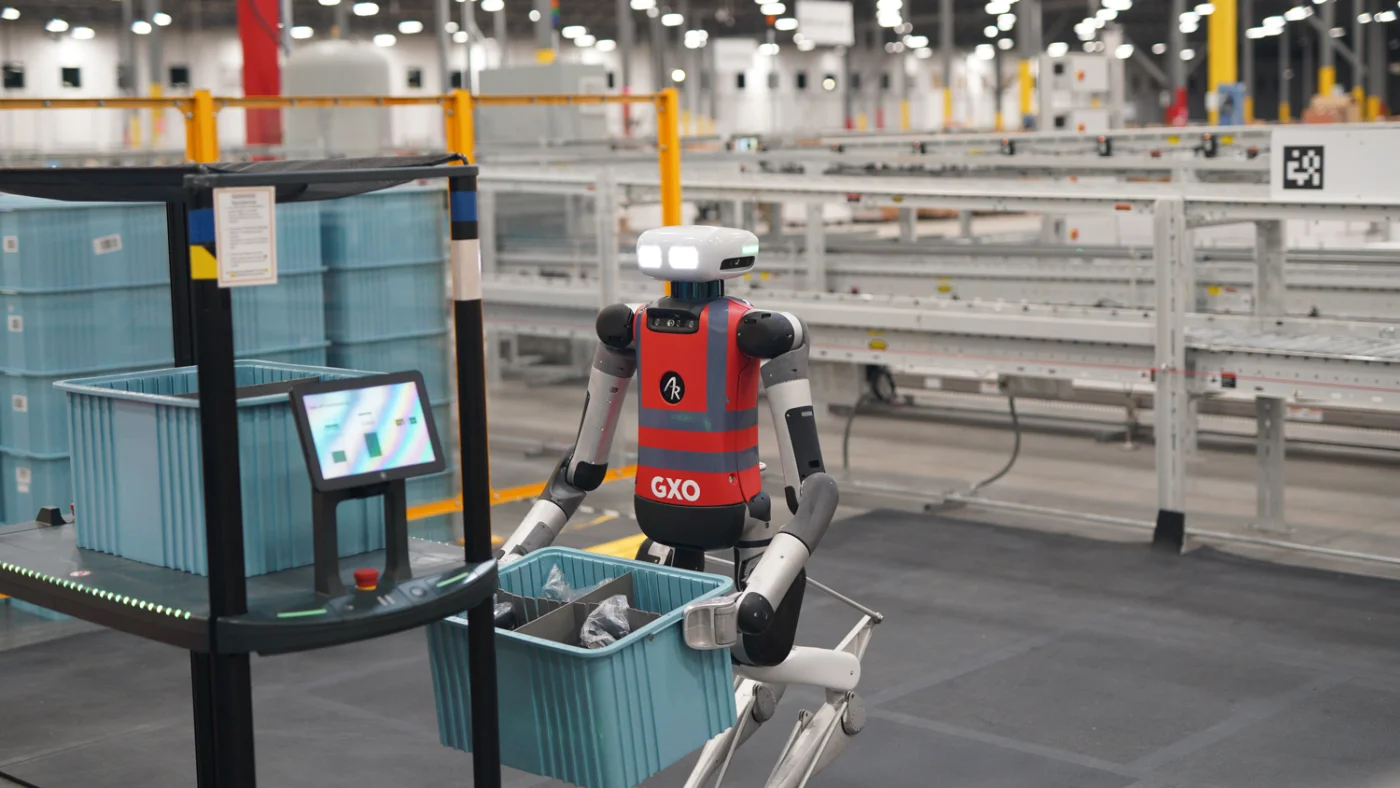
Toyota Motor Manufacturing Canada deployed 3-7 Agility Digit units to feed totes to assembly line workers. The robots pick totes from storage racks and deliver them to line-side stations. This is a high-repetition, moderate-payload task that plays to Digit’s 35 lb carrying capacity.
The deployment revealed two primary humanoid robot challenges. Battery management required staggered charging schedules, with Toyota running overlapping shifts to maintain continuous coverage. MES integration with Toyota’s production management system took longer than expected because of custom data field mappings unique to TMMC’s configuration.
What makes this deployment notable? Toyota didn’t choose Digit for a demo. They chose it for a real production task that previously required human workers to walk thousands of steps per shift. The ROI calculation wasn’t about replacing workers. It was about reducing ergonomic injury risk from repetitive walking and lifting.
Airbus and UBTech Walker S2
Airbus is testing UBTech Walker S2 units in aircraft manufacturing environments, according to UBTech’s partnership announcements. Aerospace manufacturing presents an extreme version of every humanoid robot challenge. Aircraft fuselages are cramped, metal-dense (creating severe Wi-Fi interference), and filled with tight-tolerance components where a 2cm navigation drift could mean contact with a multi-million-dollar structure.
The Walker S2’s 3-minute battery swap is particularly relevant in aerospace settings. Charging stations inside a fuselage aren’t practical. Workers need the robot to swap batteries at a staging area and return to the work zone quickly. The 52 degrees of freedom also help the Walker S2 navigate the confined spaces inside an aircraft body.
Mercedes-Benz and Apptronik Apollo
Mercedes-Benz is deploying Apptronik Apollo robots at its Digital Factory Campus in Berlin, according to Apptronik’s partnership announcements. The deployment integrates Google Gemini multimodal reasoning to let Apollo interpret visual instructions and adapt to new tasks without explicit programming for each variation.
Apollo’s 55 lb payload capacity makes it suitable for heavier automotive components that lighter platforms can’t handle. The Gemini integration addresses one of the humanoid robot pilot program challenges that doesn’t appear in our top five but matters for scalability: the cost and time required to program robots for each new task variant.
Figure AI Livestream: 140,000+ Packages
Figure AI demonstrated its Figure 03 robots sorting over 140,000 packages during a 100+ hour continuous livestream operation, according to Ars Technica (May 2026). The livestream was significant because it showed sustained performance over days, not minutes. Most robot demos run 10-15 minutes. This one ran for over four days.
The Figure 03 runs on Helix-02, a vision-language-action neural network that replaced over 100,000 lines of handwritten control code, according to Figure AI. This approach addresses gripper calibration challenges differently than traditional force-torque recalibration. Instead of tuning parameters manually, the neural network learns grasp strategies from demonstration data and adapts in real time.
Across all four case studies, the deployment timeline from contract signing to first productive task averaged 4-8 months. The longest phase wasn’t robot training or hardware installation. It was MES integration and safety certification, which together consumed 60-70% of the total deployment timeline.
Robot-as-a-Service (RaaS): Reducing Humanoid Robot Challenges Through Flexible Pricing
Robot-as-a-Service models convert a $350,000+ capital expenditure into a $1,000-$5,000 monthly operating expense. That pricing shift matters because it changes how manufacturers evaluate humanoid robot deployment risk, according to ABI Research’s 2025 robotics-as-a-service market report, which projects the global RaaS market will exceed $41 billion by 2030.
Why does RaaS reduce humanoid robot challenges? Three reasons. First, the vendor retains maintenance responsibility, including battery replacements, gripper pad changes, and software updates. Second, if a platform doesn’t work for your application, you can switch at the end of your contract term instead of writing off a capital purchase. Third, RaaS pricing aligns cost with productive output, not asset depreciation.
RaaS Pricing Comparison
| Platform | RaaS Price | Purchase Price | Monthly Cost vs. Human Worker |
|---|---|---|---|
| Figure 03 | ~$1,000/mo | Not available for purchase | ~94% lower than $30/hr burdened labor |
| UBTech Walker S2 | $5,000/mo | $350,102 | ~70% lower than $30/hr burdened labor |
| Agility Digit | RaaS available (price not public) | Not publicly priced | N/A |
The chart below shows where RaaS pricing lands relative to a single burdened shift for a human worker.
The comparison to human labor costs needs context. A fully burdened US warehouse worker costs approximately $30+ per hour including benefits, insurance, and overhead, according to Bureau of Labor Statistics (BLS) 2025 data. That translates to roughly $5,040 per month for a single-shift worker (168 hours). A Figure 03 at $1,000/month is dramatically cheaper on paper.
If you’re weighing humanoids against collaborative robots, our humanoid vs. cobot comparison breaks down where each type excels. But the robot doesn’t work a full shift yet. At 3-4 hours of runtime per charge cycle, a Figure 03 delivers roughly half the productive hours of a human worker per shift. And it can’t handle the full range of tasks a human performs. The honest comparison is: one humanoid robot at $1,000/month can handle a specific, repetitive subset of tasks that would otherwise require a portion of a human worker’s shift.
RaaS pricing will likely compress as competition intensifies. Figure AI’s $1,000/month sets a price anchor that other vendors will need to match or justify the premium. Manufacturers should negotiate 12-month contract terms with annual price review clauses to capture this deflationary trend.
Communication Roadmap: Managing Workforce Expectations
Sixty-one percent of manufacturing workers express concern about automation displacing their jobs, according to Pew Research Center’s 2024 survey on automation and work. That concern doesn’t go away when you tell workers the robots are “collaborative.” It goes away when you show them specific evidence from real deployments.
Workforce communication is an operational challenge, not a PR exercise. Poorly managed communication leads to resistance, low adoption of robot-adjacent workflows, and in some cases, deliberate interference with pilot programs. How you talk about your humanoid robot deployment directly affects whether it succeeds.
Communication Timeline
12 weeks before deployment: Announce the pilot program to all affected workers. Explain which specific tasks the robot will handle. Be explicit about what it won’t do. Use real examples: “The Digit at Toyota Canada carries totes so workers don’t have to walk 12,000 steps per shift. Workers still do assembly, quality checks, and decision-making.”
8 weeks before deployment: Begin training sessions for workers who will share workspace with the robot. Cover safety protocols, emergency stop procedures, and how to report issues. Workers should physically interact with the robot (guided by the vendor) before it starts production tasks.
4 weeks before deployment: Run the robot on non-production tasks in the actual work environment during regular shifts. Let workers observe its behavior, speed, and limitations. This is where most fear dissipates. Workers see the robot struggle with tasks they find easy, and that builds confidence in their own value.
Deployment week: Assign a dedicated human liaison (not a manager, a peer-level worker) to each work cell with a robot. This person answers questions, logs feedback, and acts as the communication bridge between workers and the deployment team.
Lessons from Real Deployments
At Toyota Canada’s TMMC facility, Agility Robotics reported that worker acceptance improved significantly after employees saw the Digit robots struggling with tasks humans handle easily. The robots’ visible limitations made them less threatening.
Rossmann, the German drugstore chain using UBTech Walker S2 for logistics, involved warehouse workers in defining which tasks the robots should handle first. Workers chose the most physically demanding and repetitive tasks, the ones they wanted to stop doing. That input created ownership over the deployment’s success. For more communication pitfalls, see our list of 7 humanoid deployment mistakes manufacturing leaders make.
Safety Compliance: ISO 10218-1:2025 and OSHA Requirements
ISO 10218-1:2025, updated in early 2025, introduced specific provisions for mobile manipulators that apply directly to humanoid robots, according to the International Organization for Standardization. Previous versions of the standard addressed fixed-base industrial robots and collaborative robots separately. The 2025 revision acknowledges that humanoid robots combine both categories: they’re mobile (like AGVs) and they manipulate objects (like robot arms).
Key Standards for Humanoid Robot Deployments
- ISO 10218-1:2025: Safety requirements for industrial robots, including mobile manipulator provisions
- ISO/TS 15066: Force and pressure limits for collaborative robot contact with human workers
- ANSI/RIA R15.08: Safety standard specifically for mobile manipulators (most directly applicable to humanoid robots)
- ISO 12100: Risk assessment methodology (required before any deployment)
- OSHA General Duty Clause, Section 5(a)(1): Requires employers to provide a workplace free from recognized hazards
Practical Compliance Steps
You need to complete a site-specific risk assessment per ISO 12100 before any humanoid robot operates alongside human workers. This isn’t optional. It’s a regulatory requirement, and insurance carriers increasingly require it before providing coverage for facilities with autonomous robots.
The risk assessment should cover: robot speed and force limits in human-adjacent zones, emergency stop reliability (which ties back to the network latency challenge), exclusion zone definitions, and failure-mode analysis for each task the robot performs. Our 2026 humanoid robot safety standards guide covers each standard in detail.
OSHA hasn’t published humanoid-robot-specific guidance as of May 2026. But the General Duty Clause applies. If a humanoid robot injures a worker, OSHA will evaluate whether the employer took reasonable steps to prevent the hazard. Documenting your risk assessment, safety protocols, and worker training is your best defense.
Frequently Asked Questions
What are the biggest humanoid robot challenges in manufacturing?
The five most critical humanoid robot challenges in manufacturing are battery runtime limits (2-4 hours vs. 8-hour shifts), gripper calibration drift on unfamiliar objects, Wi-Fi latency exceeding 100ms in metal-dense factories, SLAM navigation drift in cluttered environments, and legacy MES integration with platforms like Rockwell, Siemens, and SAP. Fewer than 20 companies will scale beyond pilot programs by 2028, according to Gartner’s January 2026 analysis.
How long do humanoid robot batteries last?
Current humanoid robot batteries last 2-4 hours under active workload. The Figure 03 runs 3-4 hours on a 2.3 kWh battery, according to Ars Technica (May 2026). Agility Digit operates approximately 4 hours between charges. UBTech Walker S2 runs 2 hours walking or 4 hours standing and supports 3-minute autonomous battery swaps. No current platform can complete a full 8-hour shift without recharging.
What is Robot-as-a-Service (RaaS) pricing for humanoid robots?
RaaS pricing ranges from approximately $1,000 per month for the Figure 03 to $5,000 per month for the UBTech Walker S2. These monthly costs compare favorably to the $30+ per hour fully burdened cost of US warehouse labor, according to BLS 2025 data. RaaS models convert large capital expenditures into predictable operating expenses and shift maintenance responsibility to the vendor.
How do humanoid robots integrate with legacy MES systems?
Humanoid robots integrate with legacy MES systems through OPC-UA and REST API middleware bridges. Rockwell FactoryTalk, Siemens Opcenter, and SAP ME all support OPC-UA connections. Integration typically takes 6-24 weeks depending on the MES platform and level of customization. Over 70% of US manufacturing facilities run MES platforms older than 10 years, according to IDC’s 2025 Manufacturing IT Survey.
What safety standards apply to humanoid robots in US factories?
Humanoid robots in US factories must comply with ISO 10218-1:2025, ISO/TS 15066 for collaborative force limits, and OSHA’s General Duty Clause (Section 5(a)(1)). ANSI/RIA R15.08 specifically addresses mobile manipulators, which includes humanoid robots. Facilities must conduct site-specific risk assessments per ISO 12100 before deploying any humanoid robot alongside human workers.
How do you reduce SLAM navigation drift in factories?
Install fiducial markers (AprilTag or ArUco) every 15 meters along the robot’s travel paths. When the robot detects a marker, it resets its position estimate to the marker’s known coordinates. This reduces SLAM drift from 20cm per 100 meters to under 2cm at each correction point, according to NIST testing data. In high-dust environments like metal fabrication, reduce marker spacing to 10 meters.
Further Reading
- Humanoid Robots for Sale in 2026: Complete Buyers Guide, with pricing, availability, and where to buy each platform
Sources
- Gartner, “Humanoid Robots: Emerging Technology Analysis,” January 2026. https://www.gartner.com/en/articles/humanoid-robots
- Goldman Sachs Research, “Humanoid Robots: The $38 Billion Market Opportunity,” January 2025. https://www.goldmansachs.com/insights/articles/humanoid-robots-market
- Ars Technica, “Figure livestreams humanoid robots sorting packages,” May 2026. https://arstechnica.com/ai/2025/05/figure-livestreams-humanoid-robots-sorting-packages/
- NIST, Autonomous Task Board (ATB) Benchmark and Agile Robotics Testing Program. https://www.nist.gov/el/intelligent-systems-division-73500/robotic-grasping-and-manipulation
- IEEE 802.11 Industrial Performance Studies. https://www.ieee.org
- CBRS Alliance, Private 5G Deployment Data. https://www.cbrsalliance.org/
- IDC, “Manufacturing IT Survey,” 2025. https://www.idc.com/
- International Organization for Standardization, ISO 10218-1:2025. https://www.iso.org/standard/82661.html
- NIOSH (National Institute for Occupational Safety and Health), Mobile Robot Safety Guidelines. https://www.cdc.gov/niosh/
- Bureau of Labor Statistics, Occupational Employment and Wage Statistics, 2025. https://www.bls.gov/oes/
- ABI Research, “Robotics-as-a-Service Market Report,” 2025. https://www.abiresearch.com
- Pew Research Center, “Automation and Work Survey,” 2024. https://www.pewresearch.org/
- Figure AI, Company Updates, May 2026. https://www.figure.ai
- Agility Robotics, Deployment Reports and Product Specifications. https://www.agilityrobotics.com
- UBTech Robotics, Walker S2 Product Specifications and Partnership Announcements. https://www.ubtrobot.com
- Apptronik, Apollo Partnership Announcements. https://www.apptronik.com

Ulrich Baldauf is the founder of There’s A Robot For That, covering humanoid robotics for manufacturing and industrial operations. He has tracked the humanoid robot sector since 2024, with a focus on safety standards (ISO 10218, EU Machinery Regulation 2023/1230) and what deployments mean for operations and EHS teams. Connect on LinkedIn: linkedin.com/in/ubaldauf