

Yes, you can buy a humanoid robot right now. A few models can be ordered online straight from the manufacturer, two more take refundable pre-orders, and the big industrial platforms are sold only through a sales team or not at all. This guide shows the buying path for each one first, then the verified prices, then what to check before you order.
Humanoid robots with a manufacturer-published price run from $4,900 to $90,000 as of August 2026, and the top figure now carries Unitree’s own “contact us for the real price” label. A second tier, including Figure 03, Boston Dynamics Atlas, Apptronik Apollo, Agility Digit and UBTech Walker S2, carries no published price at all, despite six-figure numbers circulating widely across comparison sites. That’s not a futuristic prediction. It’s a price list you can browse right now on AliExpress, JD.com, and manufacturer websites. The commercial humanoid robot market has more than doubled its options since 2024, and the pace keeps accelerating.
As of August 2026, 18 humanoid robots are currently on the market or open for pre-order and compared in this guide. Twelve of them carry a manufacturer-published price. The remaining six, all commercially deployed industrial platforms, sell by quote only and publish no unit price.
A separate tier of educational and performance humanoids sells far cheaper, from Hiwonder’s sub-$1,000 kits to Noetix’s roughly $1,400 Bumi and AGIBOT’s $25,600 X2 Neo, but those are built for classrooms and stage shows rather than industrial or household work, so this guide leaves them aside.
Here’s what makes 2026 a turning point: Chinese manufacturers shipped approximately 90% of all humanoid robots globally in 2025 (Bloomberg/Omdia, January 2026). Total worldwide shipments reached roughly 13,000 units that same year (Omdia). These aren’t prototypes collecting dust in labs. They’re working on factory floors, in airports, and in retail warehouses.
Whether you’re a manufacturer scouting automation, a research lab evaluating platforms, or simply curious about owning a humanoid robot, this guide covers every model currently available. I’ve included pricing, specifications, delivery timelines, and where to actually place an order.
Key Takeaways
- Where to buy: Unitree’s R1 and G1 and AGIBOT’s X2 and A2 Lite can be ordered online from the manufacturer today; 1X NEO and Weave Isaac 1 take refundable pre-orders; Figure 03, Atlas and the other enterprise flagships have no public order path.
- Verified prices run $4,900 to $90,000; 6 of the 18 robots here have no manufacturer-published price at all. Which robots have earned their price with verified deployments is tracked on the Humanoid Reality Index; the short list with a real published price has its own page.
- Chinese manufacturers dominate: approximately 90% of global humanoid shipments in 2025 came from Chinese companies (Omdia, January 2026).
- Prices are falling fast: IDTechEx forecasts a 68% average price decline by 2030, bringing the average cost from $114,700 down to roughly $37,000.
- Robotics-as-a-Service (RaaS) subscriptions start at $499/month (1X NEO), making humanoid robots accessible without large upfront investment.
- AGIBOT leads global shipments with 39% market share and over 5,100 units shipped in 2025 (Omdia).
- The market could reach $51 billion by 2035, growing at a 55% CAGR (Yole Group, November 2025).
Table of Contents
To understand the technology powering these machines, see our guide on how humanoid robots work. For the full cost picture beyond sticker prices, see our humanoid robot price and ROI breakdown, and if your budget stays under $30,000, the affordable humanoid robots buyer’s guide covers the budget tier in depth.
Where Can You Buy a Humanoid Robot Right Now?
You can buy a humanoid robot online today, but only a handful are sold that way. Unitree’s R1 and G1 lines and AGIBOT’s X2 and A2 Lite go straight into a cart on the manufacturer’s own store. The 1X NEO and the Weave Isaac 1 take refundable pre-orders. Everything above that tier, from Figure 03 to Boston Dynamics Atlas, has no public order path: you reach a sales team, or you cannot buy it at all. The table lists the buying path for every model in this guide; each model name links to its evidence page in the Humanoid Reality Index, and the prices sit in the price table further down.
| Model | Where to buy | Status |
|---|---|---|
| Unitree R1 (AIR, R1, EDU) | Unitree online store | Order online now |
| Unitree G1 | Unitree online store | Order online now |
| AGIBOT X2 | AGIBOT online store | Order online now |
| AGIBOT A2 Lite | AGIBOT online store | Order online now |
| EngineAI T800 | EngineAI product page | Sold via JD.com in China; no price on the maker’s site |
| AiMoga Mornine M1 | AiMOGA self-operated flagship store on JD.com | Order online in China |
| Weave Isaac 1 | Weave order page | Reserve with a refundable deposit, California deliveries from autumn 2026 |
| 1X NEO | 1X order page | Pre-order with a refundable deposit, US deliveries 2026 |
| Unitree H2 | Unitree online store | Listed, online ordering not enabled yet |
| Unitree H1 | Unitree online store | Listed as “contact us for the real price”, online ordering disabled |
| Agility Digit | Agility Robotics sales team | Contact sales, mainly robots-as-a-service |
| UBTech Walker S2 | UBTech sales team | Contact sales |
| Leju Kuavo-5 | Leju sales team | Contact sales |
| Apptronik Apollo 2 | Apptronik enterprise process | Enterprise pilots only |
| HMND 01 Alpha | Humanoid enterprise sales | Enterprise deployments only |
| Figure 03 | No public order path | Not for sale: partner deployments, no pre-order |
| Boston Dynamics Atlas | No public order path (Atlas price explained) | Released to a select group of early adopters |
| Astribot T1 | No public order path | Maker site documents only the S1 |
| Tesla Optimus | No public order path | Not for sale: no product page, no published price |
Unitree, AGIBOT, Weave and 1X order pages checked on the makers’ own sites on 30 September 2026. All other rows follow the August 2026 audit. Buy from the manufacturer’s own store or order page where one exists; listings on third-party sites can differ from it.
Which Sales Channels Sell Humanoid Robots?
Humanoid robots for sale are available through four main channels: online marketplaces, direct manufacturer sales, authorized resellers, and RaaS subscriptions. AliExpress currently lists three Unitree models (R1 AIR, R1, and G1) with international shipping, making it the easiest channel for individual and small-business buyers.
Online Marketplaces
AliExpress carries the Unitree R1 AIR ($4,900), Unitree R1 ($5,900), and Unitree G1 (~$19,000 international). These ship globally with standard AliExpress buyer protections. Delivery times vary from two to six weeks depending on your location. Payment through AliExpress provides dispute resolution if something goes wrong.
JD.com is the primary marketplace for Chinese buyers and increasingly serves international customers. Available models include Unitree R1 (29,900 yuan), the EngineAI T800 (EngineAI’s own Buy Now button leads to JD.com), and AiMoga Mornine M1 (285,800 yuan). JD.com is Unitree’s biggest corporate customer, making it the most reliable source for their products in China.
Direct from Manufacturers
For enterprise-grade robots, buying directly from the manufacturer is standard practice. Figure AI sells the Figure 03 through direct relationships. Agility Robotics, Boston Dynamics, Apptronik, and Humanoid (HMND 01 Alpha) all use direct sales with enterprise qualification processes. Expect longer sales cycles (weeks to months) but better support, custom configuration, and volume pricing.
Authorized Resellers
Humandroid serves as a reseller for the UBTech Walker S2 in Western markets. Reseller channels are still limited for humanoid robots compared to industrial cobots, but this is expanding. Check manufacturer websites for authorized distributor lists before purchasing from third parties.
Robotics-as-a-Service (RaaS)
Two RaaS options are available in 2026. The 1X NEO at $499 per month is the most affordable entry point. UBTech’s Walker S2 at $5,000 per month targets enterprise logistics and manufacturing. RaaS typically includes maintenance, software updates, and support. It converts capital expenditure into operating expenditure, which can simplify procurement and budgeting.
How Much Do Humanoid Robots Cost in 2026?
Get the Verified Robot Price & Deployment Table (October 2026)
32 humanoid robots. Every price checked against the maker’s own order page or filing, no aggregator numbers, plus the honest deployment status for each. Free PDF, updated monthly. Enter your email and the download link appears right here.
Humanoid robot prices published by manufacturers span $4,900 for the Unitree R1 AIR to $90,000 for the Unitree H1, a figure Unitree itself now labels “contact us for the real price”; the newest maker-listed price is the Unitree H2 at $29,900 (store page live, ordering not yet enabled). Higher figures quoted elsewhere for Atlas, Figure 03 and Walker S2 trace to resellers, anonymous reports or aggregator listings. IDTechEx forecasts a 68% average price decline by 2030, bringing the average cost from $114,700 to approximately $37,000 (IDTechEx, May 2026). That trajectory mirrors what happened with industrial cobots a decade ago.
Humanoid robots with published manufacturer prices span $4,900 to $90,000 in 2026; half the models commonly listed carry no public price. IDTechEx projects a 68% average price decline by 2030, from $114,700 to approximately $37,000 (IDTechEx, May 2026), following a trajectory similar to the cobot industry’s maturation in the 2010s.
Two pricing models exist today. The traditional approach is a one-time hardware purchase. The newer approach, Robotics-as-a-Service (RaaS), lets you subscribe. 1X offers its NEO robot at $499 per month, while UBTech’s Walker S2 is available at $5,000 per month. RaaS removes the upfront capital barrier and shifts costs to operational budgets.
The table below shows all 18 models available or coming to market in 2026, sorted by price.
| Model | Manufacturer | Price (USD) | Price source | Availability | Best For |
|---|---|---|---|---|---|
| Unitree R1 AIR | Unitree | $4,900 | Manufacturer store | Shipping | Entry-level / education |
| Unitree R1 | Unitree | $5,900 | Manufacturer store | Shipping | Hobbyist / developer |
| Weave Isaac 1 | Weave Robotics | $7,999 or $449/mo | Manufacturer order page | Reservations; CA autumn 2026 | Home chores / domestic tasks |
| Astribot T1 | Astribot | No current price | Earlier ¥89,900 listing removed; maker site documents only the S1 (checked 1 Aug 2026) | No current order path for the T1 | Home / general-purpose entry model |
| Unitree G1 | Unitree | $13,500 | Manufacturer store | Shipping | Research / light industry |
| 1X NEO | 1X Technologies | $20,000 or $499/mo | Manufacturer | US deliveries 2026 | Home / domestic tasks |
| EngineAI T800 | EngineAI | List price withdrawn (last listed $40,500 to $80,800 intl) | Removed from EngineAI’s international and Chinese sites after 15 Sep 2026; JD.com listing not verifiable (checked 5 Oct 2026) | Via JD.com (China) | Industrial / research |
| AiMoga Mornine M1 | AiMoga (Chery) | ¥285,800 (~$42,200) | JD.com self-operated flagship store | Shipping (China) | Retail / showroom |
| Unitree H1 | Unitree | $90,000 | Manufacturer store (listed "contact us for real price") | Contact sales | Full-size research platform |
| AGIBOT X2 Neo | AGIBOT | $25,600 | Manufacturer store (cart, in stock; checked 5 Oct 2026) | Shipping | Performance / entertainment |
| AGIBOT A2 Lite | AGIBOT | $44,560 | Manufacturer store (cart, in stock) | Shipping | Performance / entertainment |
| Leju Kuavo-5 | Leju | No published price | None published (series average ¥308,100 in 2025 per IPO filing) | Contact sales | Industrial pilots |
| Apptronik Apollo 2 | Apptronik | No published price | None published ($50,000 is a 2023 at-scale target) | Enterprise pilots | Warehouse / logistics |
| Figure 03 | Figure AI | No published price | None published ($130,000 figure derives from Figure 02) | Partner deployments only | Enterprise deployment |
| HMND 01 Alpha | Humanoid | No published price | None published | Enterprise | Enterprise deployment |
| UBTech Walker S2 | UBTech | No published price | None published ($180,000 is a reseller listing) | Contact sales | Industrial logistics |
| Agility Digit | Agility Robotics | $8,500/mo RaaS (~$100k/yr) | Manufacturer investor deck (SEC exhibit) | RaaS, purchase available | Warehouse logistics |
| Boston Dynamics Atlas | Boston Dynamics | No published price | None published (~$320,000 reported anonymously) | Select early adopters | Heavy industrial |
What stands out is the growing middle tier. In 2024, you had either cheap research kits or expensive enterprise platforms. Today, robots like the AiMoga Mornine M1 (¥285,800, about $42,200) fill the gap between hobbyist toys and six-figure industrial machines, while units such as the Leju Kuavo-5 sit in an enterprise tier that carries no published price at all.
For a deeper look at budget-friendly options, see our humanoid robot cost and ROI breakdown. Manufacturers who find a figure of theirs wrong here can correct it from a verified company domain, at no cost and with no sponsored placement on offer.
Consumer and Entry-Level Humanoid Robots ($4,900 to $25,000)
Five models now come in below $25,000, a segment that barely existed 18 months ago. Unitree dominates this tier with three models under $20,000, all available through mainstream e-commerce platforms like AliExpress (AliExpress, 2026). For the first time, buying a humanoid robot is almost as straightforward as ordering a large appliance online.
Unitree R1 AIR ($4,900)
The Unitree R1 AIR is the cheapest humanoid robot available globally at $4,900. It offers 20 degrees of freedom and a monocular camera system. It became available on AliExpress in April 2026, with deliveries expected to start around June 30, 2026 (robotnews.therundown.ai, April 2026).
In the United States, the R1 AIR is priced higher at approximately $6,800 due to shipping and import costs (robotnews.therundown.ai, April 2026). That’s still remarkably affordable for a bipedal humanoid. It won’t carry your groceries or mop the floor. But as a development platform, educational tool, or proof-of-concept machine, it’s genuinely accessible.
The R1 AIR strips features to hit its price point. Compared to the standard R1, you lose six degrees of freedom and the binocular camera. For hobbyists and educators who don’t need precision manipulation, those trade-offs make sense. For serious developers, the standard R1 is worth the extra $1,000.
Unitree R1 ($5,900)
The Unitree R1 upgrades the R1 AIR to 26 degrees of freedom and a binocular camera for depth perception. It’s available on both AliExpress and JD.com. In China, pricing on JD.com starts at 29,900 yuan, approximately $4,370 at current exchange rates.
JD.com has become Unitree’s biggest corporate customer, making these robots accessible through China’s largest direct-sales e-commerce platform. The R1’s binocular vision system gives it the depth perception needed for basic object interaction and spatial mapping. That’s a meaningful upgrade over the R1 AIR’s single camera.
For international buyers, expect pricing around $5,900 through AliExpress. Shipping from China typically takes two to four weeks depending on destination. Customs duties vary by country, so factor in an extra 10-20% for total landed cost.
For every reported Unitree G1 price tier with source and verification date, see my Unitree G1 price and specs profile.
Weave Isaac 1 ($7,999 or $449/month)
The Weave Robotics Isaac 1 costs $7,999 outright or $449 per month, with a $250 fully refundable reservation due today. Weave takes reservations directly on its own order page, with deliveries to California beginning in autumn 2026 and broader US availability from 2027. An optional premium membership runs $99 per month. Note what Isaac 1 is and is not: it is a wheeled humanoid torso on a lifting column rather than a bipedal robot, and it rises to about 5 feet 9 inches when working. For buyers asking what a chore or butler robot actually costs today, it is currently the cheapest credible answer, undercutting the 1X NEO by roughly $12,000. (Source: weaverobotics.com/isaac-1/order, verified 19 July 2026.)
Unitree G1 ($13,500)
The Unitree G1 costs $13,500 as of July 2026, the price listed on both Unitree’s own store and its corporate product page. That figure excludes tax and shipping, and the base unit does not support secondary development; the G1 EDU developer edition is contact-sales only. The $16,000 still widely quoted for the G1 traces back to the robot’s ICRA Yokohama launch announcement in May 2024 and is two years out of date. (Sources: shop.unitree.com and unitree.com/g1, verified 19 July 2026.)
The Unitree G1 (full review) packs 23 to 43 degrees of freedom into a compact, foldable frame standing just 1.27 meters tall and weighing 35 kilograms. Its configuration flexibility, from 23 DOF in the base model to 43 DOF with dexterous hands, makes it adaptable to different use cases. The G1 runs for approximately 2 hours on its quick-swap battery.
Japan Airlines is currently testing the G1 at Tokyo’s Haneda Airport for baggage handling operations. That’s a credible real-world deployment, not a lab demo. The G1 also won the world’s first robot combat competition, which says something about its structural durability and motion control.
The G1’s foldable design deserves attention. When folded, it fits in spaces roughly the size of a large suitcase. That portability matters for research teams that need to transport robots between locations and for commercial users with limited storage. No other humanoid at this price point offers that feature.
International pricing through AliExpress runs higher than Unitree’s own $13,500 listing once import and shipping are added. Buyers should contact Unitree directly for volume pricing on orders of five or more units.
1X NEO ($20,000 or $499/month)
The 1X NEO stands out for its Robotics-as-a-Service pricing model. At $499 per month, it’s the most affordable way to deploy a humanoid robot without committing major capital. The Norwegian-designed robot targets both home and commercial environments. Pre-orders are open with a $200 fully refundable deposit, and 1X states that US deliveries start in 2026; as of July 2026, no customer deliveries have been verified. The purchase option is $20,000 under an Early Access program that includes a 3-year warranty. (Source: 1x.tech/order, verified 28 July 2026.)
What makes the 1X NEO interesting isn’t just the price. It’s the subscription model itself. For a small business, $499 per month is manageable as an operating expense. No depreciation to calculate, no large purchase order to justify. If the robot doesn’t perform, you stop subscribing. That shifts risk from buyer to manufacturer.
1X Technologies, the company behind NEO, has raised substantial venture capital and positioned itself as a consumer-first humanoid company. Their focus on home use cases sets them apart from most competitors who target factories and warehouses.
Mid-Range Humanoid Robots ($25,000 to $100,000)
The $25,000 to $100,000 range now holds seven of the robots in this guide, from AGIBOT’s performance-focused X2 Neo to full-size industrial platforms. Leju Robotics has already begun delivering its Kuavo-5 to automotive manufacturers including FAW Hongqi and Nio (The Robot Report, 2026). This segment is where the market is growing fastest, connecting consumer-grade affordability with enterprise-grade capability.
AGIBOT X2 Neo ($25,600)
The AGIBOT X2 Neo costs $25,600 and can be added to a cart and bought directly on AGIBOT’s own store. It is the base model of the X2 line: until September 2026 the same store listing read “AGIBOT X2” at $24,240, and AGIBOT now sells it under its official type designation X2 Neo. It is a half-size humanoid, 1.31 metres tall with 30 degrees of freedom, and AGIBOT positions it for the entertainment and commercial performance sector rather than industrial work. Worth knowing before you compare it with a warehouse robot: it is built for motion range and preset choreography, not payload or manipulation. AGIBOT is one of the few Chinese manufacturers selling humanoids outright in US dollars with live stock rather than a contact form. (Source: store.agibot.com/products/x2, verified 5 October 2026.)
EngineAI T800 (List Price Withdrawn)
EngineAI no longer publishes a price for the T800. Until at least mid-September 2026 its English site listed four editions in US dollars: $40,500 (Basic), $54,000 (Open Source), $63,000 (Pro) and $80,800 (Max), and its Chinese site listed the domestic tiers at ¥180,000 to ¥360,000 when last audited in August. On 5 October 2026 both product pages show specifications only. The “Buy Now” button leads to a JD.com search that requires a JD login, so no current marketplace price could be verified. The Humanoid Reality Index entry for the T800 records the same status. (Sources: en.engineai.com.cn/product-t800 and engineai.com.cn/product-t800, checked 5 October 2026; USD list last recorded 15 September 2026.)
The T800 launched in China on 2 December 2025 as a full-size general-purpose humanoid in four editions, priced from ¥180,000 and sold through JD.com (Sina Finance, 2 December 2025). Until EngineAI publishes a price again, treat any T800 figure as historical or as a reseller quote, not as a list price.
But is this mid-range tier a sweet spot or a compromise? For most commercial buyers, I’ve found that it hits the right balance. These robots have enough payload, dexterity, and battery life to handle real tasks, and they don’t require the six-figure budgets of premium platforms.
AiMoga Mornine M1 (~$42,200)
The AiMoga Mornine M1 is priced at 285,800 yuan (approximately $42,200 at the ECB reference rate of 6.77 CNY/USD on 24 July 2026) and available on JD.com. Built by AiMoga, a subsidiary of Chinese automotive manufacturer Chery, it stands 167 centimeters tall, weighs 70 kilograms, and provides 40 degrees of freedom excluding its dexterous hands. Walking speed reaches 1 meter per second.
The M1’s perception system is thorough: 3D LiDAR, two depth cameras, one wide-angle camera, and four ultrasonic radars. That sensor fusion enables reliable obstacle avoidance and environmental mapping. The 0.7 kWh battery provides approximately 2 hours of operation after 2 hours of charging. CE certification makes it eligible for the European market.
Stock is expected after May 23, 2026 (carnewschina.com). The Chery automotive pedigree matters here. Automotive manufacturers understand mass production, supply chains, and quality control at scale. That experience likely translates to better build quality and more reliable parts availability than a pure robotics startup can offer.
AGIBOT A2 Lite ($44,560)
The AGIBOT A2 Lite costs $44,560, also with a working cart and in-stock status. This is the full-size machine in AGIBOT’s priced line-up, again aimed at entertainment and commercial performance, with multi-robot fleet control and open choreography as the headline features. Note the naming trap: the A2 Ultra and X2 Ultra are different, more capable robots aimed at reception and exhibition-guide roles, and neither carries a real price. The X2 Ultra listing shows $999,999, which is a placeholder used to block checkout, not a price. (Source: store.agibot.com/products/a2-lite, verified 19 July 2026.)
Leju Kuavo-5 (No Published Price)
Leju publishes no price for the Kuavo-5. Its product pages list a telephone number rather than a purchase path. Leju’s ChiNext IPO prospectus, accepted 19 May 2026, does disclose realized selling prices for the Kuavo series: the average price per unit fell from ¥413,900 in 2024 to ¥308,100 in 2025, roughly $61,100 to $45,500 at 6.78 CNY/USD, while unit sales rose from 32 to 577. That is a series-wide average across earlier Kuavo 4 and 4Pro variants, not a Kuavo-5 list price. A figure of about ¥600,000 is often quoted: Leju staff gave that number verbally to Chinese financial outlet Cailianshe at a trade conference in April 2024, described as approximate. It is a stated price rather than a published list price, and it sits well above what Leju actually realized per unit, which is the more useful number. (Source: Leju ChiNext IPO prospectus via Chinese financial press, 19 May 2026.)
The Leju Kuavo-5 delivers 360Nm of joint torque and omnidirectional gait capability at 4.6 kilometers per hour. Leju Robotics is already delivering units to FAW Hongqi, Nio, and Haier, which means the Kuavo-5 has cleared the bar from pilot to production deployment.
A joint venture factory with Dongfang Precision in Foshan, Guangdong Province, produces one robot every 30 minutes with a target output of 10,000 units per year. That production rate positions Leju as one of the highest-volume humanoid manufacturers in the world. Leju projects the Kuavo-5’s price will decline to approximately $15,000 by 2050.
The Kuavo-5’s automotive customer base is strategically significant. When automakers adopt humanoid robots for their own manufacturing lines, they effectively validate the technology for every other manufacturer watching. FAW Hongqi and Nio aren’t experimenting. They’re integrating these robots into production workflows, which sends a clear signal to the rest of the industry.
Apptronik Apollo (No Published Price)
Apollo has no publicly published price. Apptronik’s only conversion path is a “Get Started” enterprise contact form, and the current product is Apollo 2, offered in bipedal and wheeled-base configurations. The $50,000 figure attached to Apollo across the web comes from CEO Jeff Cardenas telling IEEE Spectrum in August 2023 that “long term, a humanoid needs to cost less than US $50,000.” That is an at-scale cost target stated at the robot’s unveiling, not a sale price. (Sources: apptronik.com and IEEE Spectrum, 23 August 2023; verified 19 July 2026.)
Apptronik’s Apollo targets enterprise applications, currently running pilot deployments with several large manufacturers. The Mercedes-Benz partnership for manufacturing use cases brings credibility and a demanding test environment. Apptronik publishes no price for Apollo 2, so it cannot be placed against the Kuavo-5 on price, and Leju does not publish one either.
Apptronik, based in Austin, Texas, spun out of the Human Centered Robotics Lab at the University of Texas. That academic foundation shows in Apollo’s emphasis on safe human-robot interaction. The robot is designed to work alongside people, not in fenced-off cells. For mixed environments where robots and humans share floor space, that design philosophy matters.
Unitree H1 ($90,000)
The Unitree H1 is Unitree’s full-size humanoid platform targeting research institutions and industrial users. At $90,000, it sits at the top of the mid-range tier. Availability is through direct sales contact with Unitree, reflecting its positioning as a professional rather than consumer product.
The H1 serves as a bridge between Unitree’s affordable consumer robots and the enterprise platforms from companies like Boston Dynamics. Research labs needing a full-size humanoid without moving into quote-only enterprise territory will find the H1 worth evaluating. Unitree’s track record with the Go2 quadruped (widely adopted in research) suggests strong developer support and documentation.
Enterprise Humanoid Robots ($100,000+)
Enterprise platforms above $100,000 target large-scale industrial deployments where ROI justifies the investment. UBTech sold 1,079 full-size humanoid units in 2025, generating 821 million yuan in humanoid segment revenue, a 2,203% year-over-year increase (UBTech Annual Report, 2025). These aren’t research curiosities anymore. They’re revenue-generating products with growing order books.
Figure 03 (No Published Price)
Figure 03 has no publicly published price. Figure AI’s product page offers no purchase option, no pre-order, no waitlist and no reservation mechanism, only a newsletter signup and a contact form. Figure places robots through partner deployments such as BMW Spartanburg rather than retail sale. The ~$20,000 sometimes quoted is a long-term at-scale aspiration, and the $130,000 figure circulating widely traces to reporting about the earlier Figure 02, not the 03. (Source: figure.ai, verified 19 July 2026.)
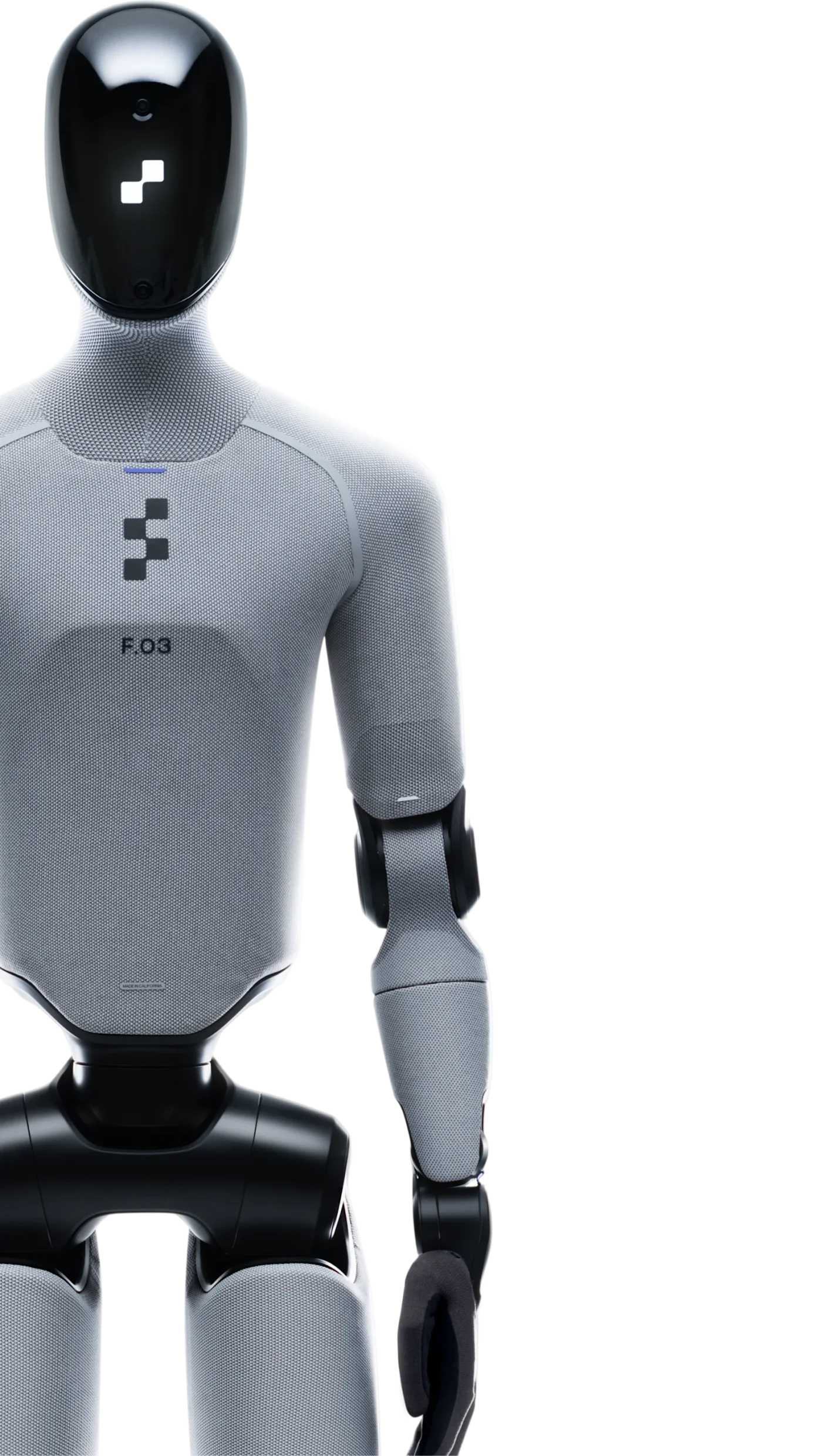
Figure AI’s third-generation humanoid robot has moved from prototype to production, with more than 350 units delivered from the company’s BotQ factory in California (Figure AI, May 2026). The Figure 03 stands 1.68 meters tall, weighs 60 kilograms, has 30 degrees of freedom, and runs for approximately 5 hours on a single charge.
The Figure 03 replaced the Figure 02, which was retired in November 2025 after completing its BMW Spartanburg pilot program. During that deployment, Figure robots supported production of over 30,000 vehicles across 11 months, achieving 99%+ placement accuracy. Those are production-grade numbers, not lab benchmarks.
The robot’s Helix-02 VLA (Vision-Language-Action) AI system, trained using reinforcement learning, enables impressive generalization. In one demonstration, two Figure 03 robots autonomously cleaned a room and made a bed in under 2 minutes. The robot can also walk up and down stairs using onboard camera perception.
Media estimates suggest a consumer price target around $20,000 at scale, though Figure AI has not confirmed official consumer pricing. No reference price has been published by Figure AI; the $130,000 widely repeated online derives from earlier Figure 02 reporting. As manufacturing scales, that price will almost certainly come down, but the timeline remains uncertain.
Figure AI has delivered over 350 Figure 03 humanoid robots from its BotQ factory in California as of May 2026. The third-generation robot stands 168 cm tall, features 30 DOF, a 5-hour battery, and the Helix-02 VLA AI system. During the BMW Spartanburg pilot, Figure robots achieved 99%+ placement accuracy across 30,000+ vehicles (Figure AI, May 2026).
HMND 01 Alpha (Enterprise Pricing)
The HMND 01 Alpha, developed by UK-based Humanoid (SKL Robotics Ltd.), comes in two variants: a bipedal model standing 175 centimeters tall at 70 kilograms, and a wheeled version reaching 220 centimeters (7 feet 3 inches). Both run on NVIDIA’s physical AI stack and the company’s proprietary KinetIQ AI framework.
Bosch signed a manufacturing agreement for the European market in May 2026, which is a strong endorsement. The robot’s track record includes a Siemens proof-of-concept at their Erlangen facility, where it operated autonomously for 8 hours, processed 60 containers per hour, and achieved 90%+ success rate (January 2026). A subsequent Bosch POC at their Buhl facility successfully handled five different box sizes (March 2026).
Perhaps the most telling deal is with Schaeffler, which committed to a “four-digit number” of wheeled units across global facilities by 2032. That’s at least 1,000 robots for a single customer. The bipedal version offers 1.5 meters per second walking speed, 15 kilograms payload capacity, and 4 hours of battery life. SAP Joule integration enables natural language task management.
The HMND 01 Alpha demonstrated 8 hours of autonomous operation at Siemens’ Erlangen facility, processing 60 containers per hour with 90%+ success rate (January 2026). Schaeffler has committed to deploying a “four-digit number” of wheeled HMND units across its global facilities by 2032, signaling enterprise-scale demand for humanoid logistics robots.
UBTech Walker S2 (No Published Price)
The Walker S2 has no publicly published unit price. Both UBTech’s Chinese and English product pages omit any price and route buyers to contact sales. UBTech discloses only aggregate contract values, including cumulative Walker-series orders above ¥800 million. The $180,000 figure circulating online comes from a third-party reseller rather than UBTech, and the ¥299,000 sometimes attached to the S2 belongs to a different machine, the Walker E. (Source: ubtrobot.com, Chinese and English product pages, verified 19 July 2026.)
UBTech is the world’s first publicly listed humanoid robot company, trading on the Hong Kong Stock Exchange with a $7.2 billion market valuation. The company sold 1,079 full-size humanoid units in 2025 and holds 2,985 granted humanoid robot patents, the most of any company globally.
A third-party reseller, Humandroid, has listed the Walker S2 at $180,000 with a $5,000 per month RaaS option. UBTech itself publishes no price, so that figure reflects one reseller’s terms rather than the manufacturer’s. Active deployments include Airbus, where Walker S2 units are being tested on aircraft manufacturing lines, and ROSSMANN, which is running the first large-scale European retail logistics pilot with the robot.
Revenue figures underscore the momentum: UBTech’s humanoid segment generated 821 million yuan in 2025, up 2,203% year-over-year. A partnership with Siemens for mass production positions UBTech to scale further. UBTech ranked first among humanoid robotics companies by revenue in 2025 at approximately RMB 2 billion total.
The $5,000 per month RaaS option deserves consideration for enterprises testing the waters. At that rate, you can evaluate the Walker S2 in your actual environment for a fraction of the purchase price. If it works, you transition to ownership. If it doesn’t, you walk away with data rather than a depreciating asset.
Agility Digit ($8,500/month RaaS)
Agility Robotics puts Digit at $8,500 per month on a robots-as-a-service contract. The figure comes from Agility’s own investor presentation of 24 June 2026, filed as an exhibit to the Churchill Capital Corp XI merger materials, where a footnote states: “Assumes $8,500 monthly RaaS pricing per Digit.” Read it as the company’s own working number inside an illustrative unit-economics slide, not as a quoted list price. The same deck puts annual RaaS cost to the customer at roughly $100,000 and five-year lifetime cost at about $500,000, against roughly $400,000 for the ownership route, which bundles an upfront cost with a recurring subscription. Agility publishes no standalone purchase price for a single Digit, and the $250,000 quoted across comparison sites is not supportable. One widely repeated claim worth discarding: the “$30 an hour” figure attached to Digit is Agility’s benchmark for fully burdened human labor ($30.50/hour in the deck), not what the robot costs. (Source: Agility Robotics Investor Presentation, 24 June 2026, filed as Churchill Capital Corp XI Ex. 99.2.)
Agility Robotics’ Digit is purpose-built for warehouse and logistics applications. Pilot programs with Amazon and other major logistics companies are underway. Unlike most humanoids that try to be general-purpose, Digit focuses on a narrow set of tasks: picking, placing, and moving containers in warehouse environments.
That specialization is Digit’s biggest strength and its limitation. It won’t fold your laundry or greet customers. But for moving totes in a fulfillment center, it’s optimized in ways that general-purpose humanoids aren’t. Agility’s factory in Salem, Oregon, can produce robots at scale, and the Amazon relationship provides a clear path to volume deployment.
Boston Dynamics Atlas (No Published Price)
Atlas has no publicly published price. Boston Dynamics’ Atlas page carries no price and no purchase path, only a “Get in touch” contact form (checked October 1, 2026), and the company states it is starting with a select number of early adopters. A figure of about $320,000 was reported by KED Global in January 2026, attributed to sources briefed on the plan and framed as a directional ceiling rather than a list price. The $420,000 quoted across comparison sites has no primary source at all. (Sources: bostondynamics.com; KED Global, 20 January 2026.) Where each circulating Atlas figure comes from, and how a company can get one, is in my Boston Dynamics Atlas price guide.
Boston Dynamics’ Atlas remains the premium benchmark in humanoid robotics, though the company publishes no price for it. The electric Atlas (which replaced the hydraulic version in 2024) offers advanced mobility including complex terrain navigation. Its 2026 production run is committed to Hyundai and Google DeepMind (Forbes, January 2026), and Boston Dynamics still describes Atlas as a platform in development (September 2026).
That leaves Atlas in an unusual position: it is one of the most closely watched humanoids, yet there is no price to rank it against, so it cannot be compared on cost. If you need a robot on your floor in 2026, the models with a published price or an open order path are in the buying-path table above.
How Big Is the Humanoid Robot Market in 2026?
The market is growing rapidly. Analysts project it will reach $6 billion by 2030 and $51 billion by 2035, growing at a compound annual growth rate of approximately 55% (Yole Group Humanoid Robots 2025 report, November 2025). IDTechEx provides a more conservative estimate of $29.5 billion by 2036 with 1.8 million annual shipments (IDTechEx Humanoid Robots 2026-2036).
AGIBOT leads the world in humanoid shipments. The company shipped over 5,100 units in 2025, capturing 39% global market share (Omdia, January 2026). By March 2026, AGIBOT had reached 10,000 cumulative units shipped (The Robot Report). Chinese companies collectively shipped approximately 90% of global humanoid units in 2025 (Bloomberg/Omdia).
For profiles of every manufacturer in this space, see my humanoid robot companies 2026 guide. For deployment status in factories, my guide to humanoid robots in manufacturing covers the major players.
What Is the ROI on a Humanoid Robot?
Payback periods range from 6 months at high utilization to 15 months at medium utilization, according to IDTechEx modeling (IDTechEx, May 2026). Operating costs could drop below $5 per hour by 2030 under high-utilization scenarios. Those figures make humanoid robots cost-competitive with human labor for specific repetitive tasks in high-wage markets.
Budget 20 to 40 percent above the hardware cost for first-year integration: site preparation, safety infrastructure, software configuration and training. Returns are strongest with high-repetition tasks and long shifts above 70 percent utilization, and weaken when every deployment needs custom engineering. The full model, including subscription versus purchase, is in my humanoid robot price and ROI breakdown.
Not sure if your facility is ready? Our humanoid robot readiness framework can help you decide.
What Should You Check Before Buying a Humanoid Robot?
Before buying any of these platforms, a structured evaluation process prevents costly mismatches between robot capabilities and operational requirements. The ISO 10218 safety standard and ISO/TS 15066 collaborative robot guidelines establish the minimum compliance framework for humanoid deployments in workplaces (ISO). Skipping the checklist is how companies end up with expensive equipment gathering dust.
Task Fit Assessment
Match the robot’s specifications to your actual task requirements. Key questions: What payload does the task require? What reach envelope is needed? Does the task require bipedal locomotion, or would a wheeled variant (like the HMND 01 Alpha’s wheeled model) work? Many buyers over-specify, paying for capabilities they never use.
Test the specific tasks you need before committing to a purchase. Most enterprise manufacturers offer pilot programs or demonstrations. Ask for a proof-of-concept deployment in your actual environment, not a showroom demo. The difference between a controlled demo and real-world conditions can be dramatic.
Infrastructure Requirements
Evaluate your facility for floor space, power supply, network connectivity, and charging infrastructure. Bipedal humanoids need flat, obstacle-free walking surfaces. Charging stations require dedicated circuits. Many robots need reliable Wi-Fi or cellular connectivity for cloud-based AI processing and fleet management.
Safety and Compliance
ISO 10218 (industrial robot safety) and ISO/TS 15066 (collaborative robot safety) are the baseline standards. Depending on your jurisdiction and industry, additional regulations may apply. CE certification (required for Europe) is already available on the AiMoga Mornine M1. Verify certification status before importing any robot across borders.
Integration and Support
Ask these questions before purchasing: What programming interfaces are available? Is there an SDK? What’s the typical integration timeline? What does the warranty cover? Is on-site support available in your region? For Chinese-manufactured robots, verify that English-language documentation and support are available.
Pilot Program Availability
Before committing to a specific platform, start with a pilot whenever possible. Several manufacturers offer trial deployments: UBTech’s RaaS at $5,000 per month, 1X NEO at $499 per month, and enterprise pilots from Figure AI, Agility Robotics, and Humanoid (HMND). A three-month pilot costs far less than a failed full-scale deployment.
Understanding how humanoid robots compare to cobots helps set realistic expectations before committing to a purchase.
Frequently Asked Questions
Can I buy a humanoid robot right now?
Yes. Unitree’s R1 and G1 lines and AGIBOT’s X2 and A2 Lite can be ordered online from the manufacturer’s own store today, and the 1X NEO and Weave Isaac 1 take refundable pre-orders. Enterprise platforms such as Figure 03, Boston Dynamics Atlas, Apptronik Apollo and UBTech Walker S2 have no public order path: you go through a sales team, and Figure places its robots only through partner deployments. The buying-path table covers every model.
What is the best humanoid robot you can buy?
It depends on the job, because no humanoid does everything well yet. For research and light industrial work, the Unitree G1 is the step up you can order online. For the lowest entry point, the Unitree R1 family. For household tasks, the 1X NEO and the Weave Isaac 1 are the two home robots open for pre-order, both still before wide delivery. For industrial work, the platforms with real customer deployments are sold by quote. Which robots have verified deployments rather than demos is tracked in the Humanoid Reality Index.
Can I buy an Elon Musk robot?
No. Tesla’s Optimus is not for sale: Tesla publishes no price, no product page and no spec sheet for it. The Humanoid Reality Index rates Optimus Tier 3, Demoing, with no verified customer deployment on record as of its last check on 15 August 2026. Every Optimus price circulating online is a target or an estimate, not an offer.
What is the cheapest humanoid robot for sale in 2026?
Among all humanoid robots for sale in 2026, the Unitree R1 AIR is the cheapest at $4,900 (approximately $6,800 in the United States). It offers 20 degrees of freedom and a monocular camera. Available on AliExpress since April 2026, deliveries start around June 30, 2026 (robotnews.therundown.ai, April 2026). For $1,000 more, the Unitree R1 upgrades to 26 DOF and binocular vision. If you need real manipulation work rather than a development platform, the step up is the Unitree G1 at $13,500, which packs 23 to 43 degrees of freedom into a foldable 1.27-meter, 35-kilogram frame and ships internationally at around $19,000 via AliExpress. Budget 20 to 40 percent above the hardware price for first-year integration, including site preparation, safety infrastructure, and training.
Can I buy a humanoid robot for my home?
Yes. Several of these robots are accessible to individual buyers. The Unitree R1 AIR ($4,900) and Unitree R1 ($5,900) are both available to individual buyers on AliExpress with standard shipping. The 1X NEO ($20,000 or $499/month) is specifically designed for home and commercial use. However, home-use capabilities remain limited in 2026. These robots work best as development platforms rather than household helpers. Two Robotics-as-a-Service paths lower the entry barrier, with the 1X NEO at $499 per month as the most affordable way to deploy without upfront capital. Before buying, check the practical basics: bipedal humanoids need flat, obstacle-free walking surfaces, reliable network connectivity, and charging infrastructure.
How much does a humanoid robot cost?
Humanoid robots with a manufacturer-published price range from $4,900 (Unitree R1 AIR) to $90,000 (Unitree H1) in 2026. Enterprise models such as the Boston Dynamics Atlas, Figure 03 and Agility Digit carry no published price. The mid-range spans $25,000 to $100,000 with the AiMoga Mornine M1 (¥285,800, about $42,200) as the clearest published example. Leju publishes no unit price for the Kuavo-5; its IPO prospectus discloses a 2025 series average of ¥308,100 instead. IDTechEx forecasts a 68% average price decline by 2030, bringing the average cost to roughly $37,000 (IDTechEx, May 2026). Enterprise platforms include the UBTech Walker S2 and the Agility Digit, which runs pilot programs with Amazon. Neither manufacturer publishes a unit price; figures quoted elsewhere come from resellers or estimates. Plan for total cost of ownership 20 to 40 percent above hardware in year one, covering site preparation, safety infrastructure, software configuration, and employee training.
What is Robotics-as-a-Service (RaaS)?
Robotics-as-a-Service is a subscription model that lets you deploy a humanoid robot at a monthly fee instead of purchasing outright. Two options exist in 2026: the 1X NEO at $499 per month and the UBTech Walker S2 at $5,000 per month. RaaS typically includes maintenance, software updates, and support, converting capital expenditure into predictable operating costs. The $499 NEO tier is the cheapest entry point into humanoid robotics without capital approval, while the Walker S2 tier targets industrial deployments; UBTech is the world’s first publicly listed humanoid robot company, trading in Hong Kong at a $7.2 billion market valuation. Returns are strongest with high-repetition tasks and long daily operating shifts above 70 percent utilization.
Which company has sold the most humanoid robots?
AGIBOT leads global humanoid shipments with 39% market share and over 5,100 units shipped in 2025 (Omdia, January 2026). The company reached 10,000 cumulative units by March 2026 (The Robot Report). By revenue, UBTech ranked first in 2025 at approximately RMB 2 billion. Chinese companies collectively accounted for about 90% of global shipments in 2025. Among Western manufacturers, Figure AI has moved more than 350 Figure 03 units from its BotQ factory into the field, and Agility Robotics runs pilot programs with Amazon and other major logistics companies. Unitree dominates the entry segment, with its R1 and G1 lines carried directly on AliExpress and JD.com.
Will humanoid robot prices decrease?
Yes, substantially. Prices for humanoid robots for sale are expected to drop by 68% on average by 2030, from $114,700 to approximately $37,000 (IDTechEx, May 2026). Growing manufacturing scale, competition among Chinese companies, and component cost reductions all drive prices down. Leju Robotics projects its Kuavo-5 could reach $15,000 by 2050. Near-term price drops will likely be sharpest in the consumer and mid-range segments. The pattern mirrors what happened with industrial cobots a decade ago. If your application is high-ROI today, waiting rarely pays: the strongest returns come from high-repetition tasks with long operating shifts, and pilot deployments are available from several manufacturers before you commit to a fleet.
The Bottom Line on Humanoid Robots in 2026
The market for humanoid robots for sale in 2026 has crossed an important threshold. You can actually buy one. That remains true after the FCC’s July 2026 Covered List decision, because the humanoid robot import ban blocks new model certifications rather than sales of already authorized machines. Not request a demo, not join a waiting list for 2028 delivery, but place an order on AliExpress and receive a bipedal humanoid robot at your door for under $5,000. That was science fiction three years ago.
Eighteen models span hobbyist budgets ($4,900), subscription access ($499/month RaaS) and an enterprise tier that is quoted on request rather than listed. Chinese companies dominate production, and price declines of 68% by 2030 (IDTechEx) will make these machines even more accessible. The biggest question isn’t whether humanoid robots will be widely deployed. It’s how quickly you need to start preparing your operations for them.
For buyers ready to explore the market today: start with a pilot program or RaaS subscription. Test in your real environment with your actual tasks. The technology is real, the vendors are shipping, and the early adopters are already capturing competitive advantages. For a look at how factory operators are actually using these robots right now, our coverage of humanoid robots in manufacturing tracks live deployments across automotive, logistics, and electronics.
Buying a Humanoid Robot? Get the Safety Documentation Sorted First.
The Robot Safety Documentation Toolkit 2026 gives your team ~96 pages of compliance templates aligned with ISO 10218:2025, including risk assessments, facility readiness checklists, and LOTO procedures built specifically for humanoid deployments. Learn more about my methodology.
📄
7 modules, 12 files
PDF + Word + Excel
Sources
- Omdia, “Humanoid Robot Market Tracker,” January 2026. omdia.com
- IDTechEx, “Humanoid Robots 2026-2036,” May 2026. idtechex.com
- Yole Group, “Humanoid Robots 2025 Report,” November 2025. yolegroup.com
- Morgan Stanley via South China Morning Post, China humanoid delivery forecast, 2026. scmp.com
- Bloomberg/Omdia, Chinese humanoid robot shipment dominance, January 2026. bloomberg.com
- Figure AI, Figure 03 production and delivery updates, May 2026. figure.ai
- UBTech, Annual Report 2025 (humanoid segment revenue, unit sales, patents). ubtrobot.com
- The Robot Report, AGIBOT cumulative shipments, March 2026. therobotreport.com
- Humanoids Daily, EngineAI T800 shipment timeline. humanoidsdaily.com
- robotnews.therundown.ai, Unitree R1 AIR U.S. pricing, April 2026. robotnews.therundown.ai
- carnewschina.com, AiMoga Mornine M1 availability, 2026. carnewschina.com
- ISO, ISO 10218 and ISO/TS 15066 safety standards. iso.org
- Humanoid (SKL Robotics Ltd.), HMND 01 Alpha specifications and POC results. humanoid.inc
- Agility Robotics, Digit specifications and pilot programs. agilityrobotics.com
- Boston Dynamics, Atlas specifications. bostondynamics.com

Ulrich Baldauf is the founder of There’s A Robot For That, covering humanoid robotics for manufacturing and industrial operations. He has tracked the humanoid robot sector since 2024, with a focus on safety standards (ISO 10218, EU Machinery Regulation 2023/1230) and what deployments mean for operations and EHS teams. Connect on LinkedIn: linkedin.com/in/ubaldauf