

Key Takeaways
- 64,542 cobots were installed globally in 2024, up 12% year-over-year (IFR World Robotics Report, Sep 2025)
- Only 16,000 humanoid robots exist globally as of 2025, with China accounting for 80%+ of all units (Counterpoint Research, Jan 2026)
- Cobot payback periods run 6 to 18 months depending on application; humanoid payback periods are not yet commercially established (robotomated.com, 2026)
- Full cobot system cost: USD 40,000 to 150,000. Advanced humanoid commercial units: USD 150,000 to 500,000 (standardbots.com, 2026)
- Figure AI’s BMW pilot achieved 99% placement accuracy over 1,250 operational hours, a promising but still isolated result (Figure AI, 2025)
The debate between humanoid robots vs cobots is no longer theoretical. Operations managers across North America face a genuine decision today: deploy a proven cobot system within weeks, or run a humanoid pilot that may take 12 to 24 months to yield usable data. According to the IFR World Robotics Report (September 2025), 64,542 cobots were installed globally in 2024, representing 11.9% of all industrial robot installations. Humanoid installations reached just 16,000 units in 2025. The gap is real, but it is closing fast.
Table of Contents
What Are Humanoid Robots vs Cobots? Key Differences Explained
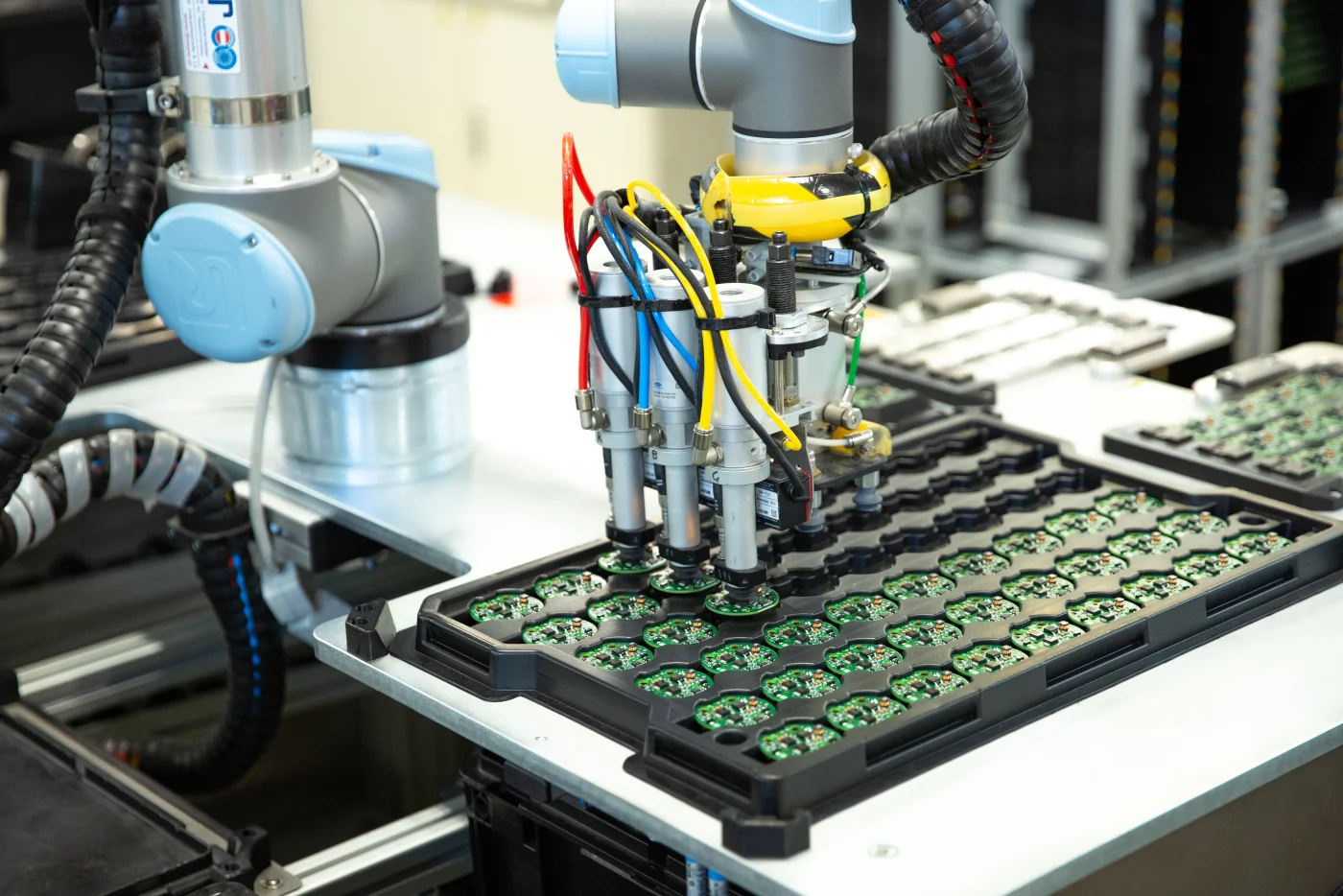
The core difference in the humanoid robots vs cobots comparison comes down to form, flexibility, and maturity. Cobots (collaborative robots) are single-arm or dual-arm systems designed for one repeatable task at a time, operating safely beside humans without safety fencing. Our collaborative robots (cobots) guide for 2026 covers their safety standards and ROI in depth. Humanoid robots mimic human body structure and are built to perform multiple task types across varied environments using the same hardware.
Understanding how humanoid robots work at the technology level helps clarify why this form-factor difference matters for deployment decisions.
Comparison Table: Humanoid Robots vs Cobots at a Glance
| Factor | Cobots | Humanoid Robots |
|---|---|---|
| Current deployment scale | 64,542 units (2024) | 16,000 units (2025) |
| Hardware cost | $25k-$75k | $35k-$500k |
| Full system cost | $40k-$150k | $150k-$500k+ |
| Payback period | 6-18 months | Not yet established |
| Task flexibility | Medium (single tasks) | High (multi-task) |
| Fenceless operation | Yes (certified) | Not at commercial scale |
| Commercial maturity | High (proven) | Early stage |
| Programming complexity | Low-medium | High |
| 2026 availability | Widely available | Limited pilots |
Sources: IFR World Robotics Report 2025, Counterpoint Research Jan 2026, standardbots.com 2026, robotomated.com 2026.
As of 2024, 64,542 cobots were installed globally, representing 11.9% of the 542,000 total industrial robot installations that year. Humanoid robots totaled 16,000 global units by end of 2025. The deployment gap between the two technologies is currently 4:1 in cobots’ favor. (IFR World Robotics Report, Sep 2025; Counterpoint Research, Jan 2026)
How Are Cobots Performing in 2026?
Cobots are no longer emerging technology. According to the IFR World Robotics Report (September 2025), 64,542 collaborative robots were installed globally in 2024, a 12% increase year-over-year and 11.9% of all industrial robot installations. The cobot market was valued at USD 1.42 billion in 2025 and is forecast to reach USD 3.38 billion by 2030 at an 18.9% CAGR (MarketsandMarkets, 2025).
Before committing to either technology, review my 2026 manufacturing readiness assessment to benchmark where your facility stands.
How Widely Are Cobots Used in Manufacturing?
Adoption is deep across North American manufacturing. According to electroiq (2025), 57% of manufacturing facilities in North America now use cobots. Automotive is the leading vertical, with 48% of automotive manufacturers using cobots in 2024.
The chart below visualizes cobot installation growth from 2017 through 2026, showing the compound rise in both unit volume and share of total industrial robot installs.
The chart above tells a straightforward story. Cobots went from a niche category in 2017 to nearly 12% of all industrial robot installs in 2024. That share is projected to reach 14.2% by 2026. These are not experimental numbers. This is a mature, growing market with established supply chains and integrator networks.
In my experience reviewing cobot deployments across food and beverage, automotive, and electronics assembly, the biggest barrier is rarely technology. It is internal change management and integration planning.
The global cobot market reached USD 1.42 billion in 2025 and is projected to grow to USD 3.38 billion by 2030, at a compound annual growth rate of 18.9%. With 64,542 units installed in 2024 alone, cobots represent the fastest-growing segment of industrial automation. (MarketsandMarkets, 2025; IFR, 2025)
Get a free module from the Robot Safety Documentation Toolkit
Enter your email and the 6-page Facility Readiness Checklist lands in your inbox, one complete module from the full toolkit. You also get humanoid robot briefings three times a week. No spam, unsubscribe anytime.
Humanoid Robot Deployments: Proof of Concept or Production Reality?
Humanoid robots crossed a meaningful threshold in 2025, with 16,000 units installed globally, though China accounted for more than 80% of all installations (Counterpoint Research, January 2026). That figure is projected to exceed 100,000 units by 2027, signaling that the scale-up is underway. The market is still dominated by a handful of Chinese suppliers: AgiBot holds 31% share, Unitree 27%, and UBTech, Leju, and Tesla each at 5%.
For specs and pricing across all major brands, see my complete guide to humanoid robot companies and models.
What Does the BMW and Figure AI Pilot Actually Prove?
The most cited real-world humanoid deployment in manufacturing is Figure AI’s Figure 02 robot at BMW’s Spartanburg plant. Over 1,250 operational hours, the system loaded more than 90,000 sheet metal parts with 99% placement accuracy per shift, contributing to 30,000+ BMW X3 vehicles (Figure AI, 2025). That is a genuine production result, not a lab demo.
If you are evaluating a similar pilot, my humanoid robot deployment guide walks through the full implementation process step by step.
What it does not yet prove is scalability across varied tasks, consistent uptime across a full fleet, or a defined ROI model that operations managers can take to a CFO. Understanding the production challenges blocking full-scale humanoid deployment puts the BMW result in proper context. The BMW pilot is a strong proof of concept. It is not yet a replicable commercial playbook.
Based on publicly available humanoid pilot data through May 2026, only three manufacturers (BMW, Foxconn, and an undisclosed automotive OEM) have disclosed specific throughput or accuracy figures from humanoid deployments. The rest remain at research or pre-production status.
Figure AI’s humanoid robot completed 1,250 operational hours at BMW Spartanburg, loading 90,000+ sheet metal parts at 99% placement accuracy per shift and contributing to production of 30,000+ BMW X3 vehicles. This represents the most detailed public humanoid manufacturing case study available as of May 2026. (Figure AI, 2025)
How Do Humanoid Robots vs Cobots Compare on Cost?
On hardware alone, cobots cost USD 25,000 to 75,000, while humanoid robots range from a USD 35,000 entry-level average up to USD 150,000 to 500,000 for advanced commercial units (standardbots.com, 2026). Full cobot systems, including integration, end-of-arm tooling, and software, run USD 40,000 to 150,000. Humanoid full-system costs are harder to pin down, but estimates from early adopters suggest USD 150,000 to 500,000 or more per unit once integration and training are included.
For a deeper breakdown of all cost components, see my complete humanoid robot cost and ROI analysis.
The chart below visualizes the cost difference between cobots and humanoid robots across both hardware and full system investment.
What Hidden Costs Should You Plan For?
Hardware price is only part of the story. Cobots have a well-established ecosystem of integrators, certified end-of-arm tooling, and plug-and-play software that keeps total project costs predictable. Humanoid deployments currently require bespoke integration work, specialized AI model training, and in most cases an on-site engineering team throughout the pilot. For a complete picture of what these expenses add up to, see my humanoid robot cost and ROI breakdown.
So the sticker price gap narrows over time for cobots. For humanoids, it may widen before it shrinks.
Cobot hardware costs range from USD 25,000 to 75,000, with full system deployment at USD 40,000 to 150,000. Advanced humanoid commercial units cost USD 150,000 to 500,000. The total cost gap between a production-ready cobot system and a commercial humanoid deployment currently runs 3:1 to 5:1. (standardbots.com, 2026)
What Do ROI and Payback Numbers Actually Show?
Cobots deliver documented, repeatable ROI across multiple applications. Machine tending pays back in 6 to 10 months. Welding pays back in 10 to 16 months. Palletizing returns the investment in 10 to 18 months (robotomated.com, 2026). These are real figures drawn from deployed systems, not projections. Humanoid robots, by contrast, do not yet have an established payback model that finance teams can underwrite with confidence.
The chart below visualizes typical cobot payback periods by application, based on data from deployed production systems.
Why Is Humanoid ROI Still Hard to Calculate?
The missing inputs are uptime, maintenance cost, and retraining frequency. A cobot installed on a palletizing line runs predictable cycles with known MTBF (mean time between failures). A humanoid robot handling varied tasks requires AI model updates when tasks change, and no commercial operator has yet published fleet-level uptime data across a full production year. Teams that skipped this planning have run into the most common humanoid deployment mistakes the hard way.
This is not a criticism of the technology. It is simply where the data stands. Expect the first credible humanoid ROI benchmarks to emerge from 2026 pilot disclosures.
The humanoid ROI gap is not primarily a hardware problem. It is a data problem. Until three to five manufacturers publish verified uptime, throughput, and total cost figures over a 12-month production run, any humanoid ROI calculation remains an estimate built on assumptions.
Safety and Fenceless Operation: Which Technology Wins?
In the humanoid robots vs cobots safety comparison, cobots win on certified standards today, and this matters operationally. Leading cobot platforms from Universal Robots, FANUC, and ABB are certified for fenceless, collaborative operation under ISO/TS 15066 and ISO 10218. Humanoid robots are not yet certified for unsupervised fenceless operation at commercial scale. McKinsey identifies four bridges humanoids must cross to reach full commercial viability: radical cost reduction, greater dexterity, sustained uptime, and safety for fenceless operation (McKinsey, 2025).
For the full regulatory picture, read my guide to humanoid robot safety standards and compliance in 2026.
What Does Fenceless Certification Actually Mean for Your Operations?
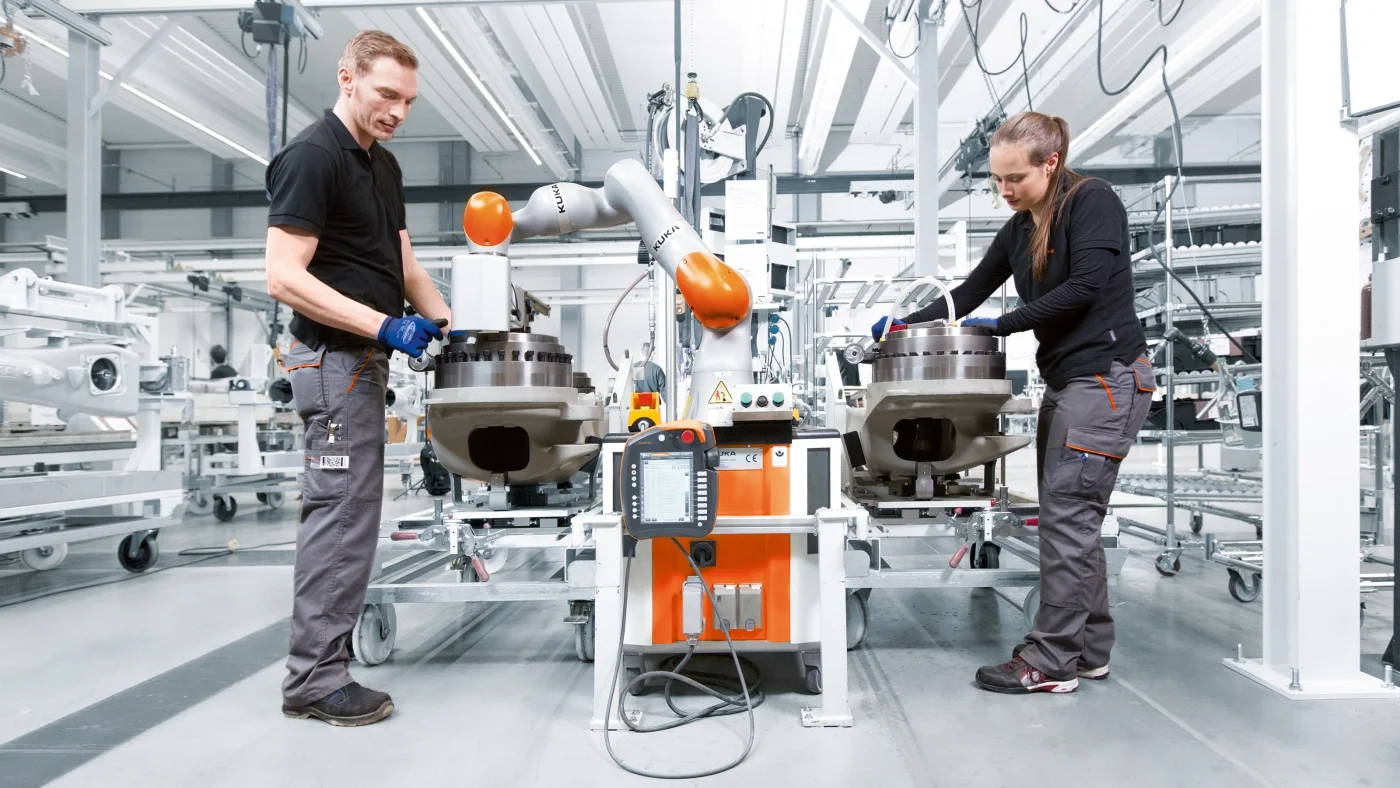
Fenceless certification means the robot can legally operate in a shared human workspace without physical barriers, which eliminates major floor space requirements and allows flexible line reconfiguration. Cobots achieved this years ago and the compliance pathway is well understood. For humanoids, fenceless certification will likely require new regulatory frameworks, not just product upgrades. My guide to 2026 humanoid robot safety standards covers the specific certifications and timelines involved. Plan for that timeline when evaluating pilots. For detailed case studies from real factory deployments, see our guide to humanoid robots in manufacturing.
McKinsey’s 2025 analysis identifies four prerequisites for humanoid robots to cross from concept to commercial reality: radical cost reduction, greater dexterity, sustained uptime, and certified safety for fenceless human-robot collaboration. Cobots have already met the fenceless safety bar under ISO/TS 15066. Humanoids have not. (McKinsey, 2025)
When Should You Choose Cobots vs Humanoid Robots?
The humanoid robots vs cobots decision depends on your time horizon and task profile. If you need automation within 12 months with a provable ROI, cobots are the clear choice. Before committing, use the manufacturing readiness scorecard to assess where your facility actually stands. If your facility handles highly variable tasks that change frequently, and you have budget and patience for an 18 to 36-month pilot program, a humanoid evaluation may make sense. Most manufacturers in 2026 should be deploying cobots now while running a small humanoid pilot in parallel.
Choose Cobots Now If You Meet These Criteria
- You need deployment within 6 to 12 months
- Your tasks are well-defined and repeatable (palletizing, welding, machine tending, assembly)
- Your CFO requires a payback model with real benchmarks
- Your team has no prior AI model training experience
- You operate in a regulated industry where safety certification is non-negotiable
Consider a Humanoid Pilot If These Apply
- You have tasks that genuinely require human-like dexterity and multi-step reasoning
- Your product mix changes frequently enough that a single-purpose cobot would require constant retooling
- You have an innovation budget separate from your operational automation budget
- Your time to ROI tolerance extends to 36 months or beyond
- You want early supplier relationships with leading humanoid vendors before the market consolidates
If you are tracking specific vendors, my complete guide to humanoid robot companies covers all major platforms including Tesla Optimus with specs and pricing.
The “cobot now, humanoid later” strategy is not a compromise. It is a deliberate sequencing approach. Cobots generate the short-term ROI that funds the humanoid pilot budget. The operational data from cobot deployments also builds the internal automation expertise that humanoid integration will require.
The Bottom Line: Cobots Now, Humanoids Later
The humanoid robots vs cobots question does not have a single right answer, but it does have a right sequence. For most industrial operations in 2026, this humanoid robots vs cobots decision comes down to a simple timeline: proven ROI now vs long-term optionality. In 2026, cobots are the practical, financially defensible choice for the vast majority of manufacturers. The global cobot market is set to reach USD 3.38 billion by 2030 (MarketsandMarkets, 2025), confirming that this is where the infrastructure and integrator ecosystem will be built. They are proven, widely available, certified for safe human collaboration, and deliver ROI in months rather than years. Humanoid robots are advancing fast, and the BMW-Figure AI pilot shows genuine production capability is within reach.
The smart move is to treat these technologies as complementary, not competing. Deploy cobots on your highest-ROI applications now. Run a structured humanoid pilot in a constrained environment where variable task handling is genuinely needed. Build your internal automation expertise through cobot operations. That expertise will be exactly what you need when humanoid deployments reach commercial scale.
For your next step, read my step-by-step implementation guide for humanoid deployments, or check my manufacturing readiness assessment to benchmark where your facility stands today.
Frequently Asked Questions
Are humanoid robots better than cobots?
In the humanoid robots vs cobots debate, neither is universally better. Cobots are proven, affordable (USD 40,000 to 150,000 full system), and deliver documented payback in 6 to 18 months across machine tending, welding, and palletizing. Humanoids offer flexibility for variable tasks but lack established ROI benchmarks and certified fenceless operation. For most factories in 2026, cobots deliver more value per dollar invested. (robotomated.com, 2026)
For a deeper breakdown of all cost components, see my complete humanoid robot cost and ROI analysis.
How much do humanoid robots cost compared to cobots?
Cobot hardware runs USD 25,000 to 75,000, with full systems at USD 40,000 to 150,000. Humanoid robots average USD 35,000 at entry level, but advanced commercial units cost USD 150,000 to 500,000, and full deployment costs including integration can push well beyond that. The total cost gap for a production-ready deployment currently runs 3:1 to 5:1 in cobots’ favor. (standardbots.com, 2026)
Can humanoid robots replace cobots in manufacturing?
When comparing humanoid robots vs cobots, replacement is not a near-term scenario. With only 16,000 humanoid units installed globally in 2025 versus 64,542 cobots installed in 2024 alone, the infrastructure, integrator ecosystem, and compliance frameworks for humanoids are years behind cobots. Humanoids may eventually handle tasks cobots cannot, but replacement at scale is a 2030s scenario, not a 2026 reality. (IFR, 2025; Counterpoint Research, 2026)
Which industries are using cobots most in 2026?
Automotive leads, with 48% of automotive manufacturers using cobots in 2024. Electronics, food and beverage, and metal fabrication follow. Overall, 57% of North American manufacturing facilities use cobots in some capacity. The applications with the best payback are machine tending (6 to 10 months), welding (10 to 16 months), and palletizing (10 to 18 months). (electroiq, 2025)
Are humanoid robots safe to use in factories?
Current humanoid robots are not certified for unsupervised fenceless operation at commercial scale. Cobots certified under ISO/TS 15066 and ISO 10218 have a clear compliance pathway for shared human workspaces. McKinsey identifies fenceless safety certification as one of four unresolved bridges for humanoid commercial viability. For regulated environments, cobots are the safe choice today. (McKinsey, 2025)
Sources
- IFR World Robotics Report 2025: Global robot demand in factories doubles over 10 years. ifr.org
- Counterpoint Research: Global humanoid robot installations reach 16,000 units as commercial deployments accelerate, January 2026. roboticsandautomationnews.com
- MarketsandMarkets: Collaborative Robot Market Global Forecast, 2025. marketsandmarkets.com
- Figure AI: Production at BMW Manufacturing, 2025. figure.ai
- McKinsey: Humanoid robots crossing the chasm from concept to commercial reality, 2025. mckinsey.com
- electroiq: Collaborative Robots Statistics, 2025. electroiq.com
- Standard Bots: Humanoid Robot Guide, 2026. standardbots.com
- robotomated.com: Cobot Adoption in Manufacturing 2026. robotomated.com
- Boston Consulting Group: Humanoid robots in the factory, 2025. bcg.com
- Goldman Sachs Research: Humanoid robots, 2025. goldmansachs.com

Ulrich Baldauf is the founder of There’s A Robot For That, covering humanoid robotics for manufacturing and industrial operations. He has tracked the humanoid robot sector since 2024, with a focus on safety standards (ISO 10218, EU Machinery Regulation 2023/1230) and what deployments mean for operations and EHS teams. Connect on LinkedIn: linkedin.com/in/ubaldauf