

Key Takeaways
- What is a humanoid robot? A robot built with a human-like body plan, typically a head, a torso and two arms, that moves on two legs or a wheeled base and works in spaces designed for people.
- Two form factors dominate: bipedal robots that walk, and wheeled-base siblings that trade legs for stability on smooth floors. They are different models with different specs, even when they share a name.
- You can buy one today. My comparison tracks 18 humanoid robots on the market or on pre-order as of August 2026, with manufacturer-published prices from $4,900 to $90,000 and 6 models without a published price.
- Roughly 90% of global humanoid shipments in 2025 came from Chinese companies (Omdia, January 2026), and IDTechEx forecasts a 68% average price decline by 2030, from $114,700 to about $37,000.
- Capability is narrower than the demos suggest: most humanoids run 1 to 4 hours per charge, and BMW’s first humanoid deployment in German production runs its pilot phase from summer 2026 at the Leipzig plant.
A humanoid robot is a robot built with a human-like body plan, typically a head, a torso and two arms, that moves on two legs or a wheeled base. It is designed to operate in spaces built for people and to use tools made for human hands, so factories, warehouses and homes do not have to be rebuilt around it. In industry, humanoid robots run structured pilots in manufacturing and logistics; at home, the first domestic models are just reaching early adopters.
That definition is the short answer to what is a humanoid robot. The rest of this guide is the long one: what the body plan actually buys you, which types exist, what these machines can and cannot do in 2026, how they differ from cobots and androids, what they cost, and which rules already apply. I track this market three times a week for the newsletter, and I will flag where the marketing runs ahead of the published evidence.
Table of Contents
What Defines a Humanoid Robot?
The body plan defines the category. A humanoid robot has a head, a torso and two arms with hands or grippers, arranged the way a human body is arranged. Most walk on two legs; a growing number put the same upper body on a wheeled base. What it does not need is a face, skin or any attempt to look like a person.
The human shape is not styling, it is a compatibility decision. Almost every workplace, doorway, staircase, shelf and tool on earth was designed around the human body. A machine with that same geometry can, in principle, take over tasks in those environments without conveyor rebuilds or new fixtures. That single argument carries the entire commercial case for humanoids, and it is why most people asking what is a humanoid robot are really asking whether one machine can slot into a workplace built for people.
One boundary worth drawing early: a humanoid robot is not the same thing as an android. An android is a humanoid robot deliberately designed to look and act convincingly human, with synthetic skin, facial expressions and lifelike movement. The industrial and domestic machines in this guide sit on the other side of that line. They keep the human body plan for practical reasons and stay visibly robotic. How the machines achieve any of this, from actuators to sensors to the AI control stack, is a separate topic, and my guide to how humanoid robots work covers the mechanics in depth.
What Types of Humanoid Robots Exist?
Four practical categories cover the market in 2026: bipedal industrial robots, wheeled-base industrial robots, domestic humanoids, and research or education platforms. The locomotion split matters more than the marketing suggests, because legs and wheels solve different problems.
| Type | Body plan | Where you see it in 2026 | Examples |
|---|---|---|---|
| Bipedal humanoid | Full human body plan, walks on two legs | Factory and warehouse pilots | Figure 03, Agility Digit |
| Wheeled-base humanoid | Human-like torso and arms on a wheeled base | Smooth-floor industrial and service work | Humanoid HMND 01 Alpha (wheeled variant) |
| Domestic humanoid | Human scale, designed for home environments | Early home deployments | 1X NEO |
| Research and education platform | Often smaller, built for development work | Universities, labs, care-setting studies | Unitree G1, NAO |
One precision rule I apply everywhere on this site: bipedal and wheeled versions are different models, even when they share a product name. Several manufacturers now ship a walking flagship alongside a wheeled sibling, and the two differ in runtime, payload, speed and price. A spec published for one variant tells you nothing reliable about the other, so always check which form factor a claim refers to. The full roster of who builds what sits in my guide to humanoid robot companies in 2026.
What Can Humanoid Robots Actually Do in 2026?
In 2026, humanoid robots reliably handle structured, repetitive material-moving tasks in supervised pilots: picking totes, sorting parts, tending machines, loading containers. They do not yet run unsupervised across a whole facility, and home capability trails industrial capability by years, not months.
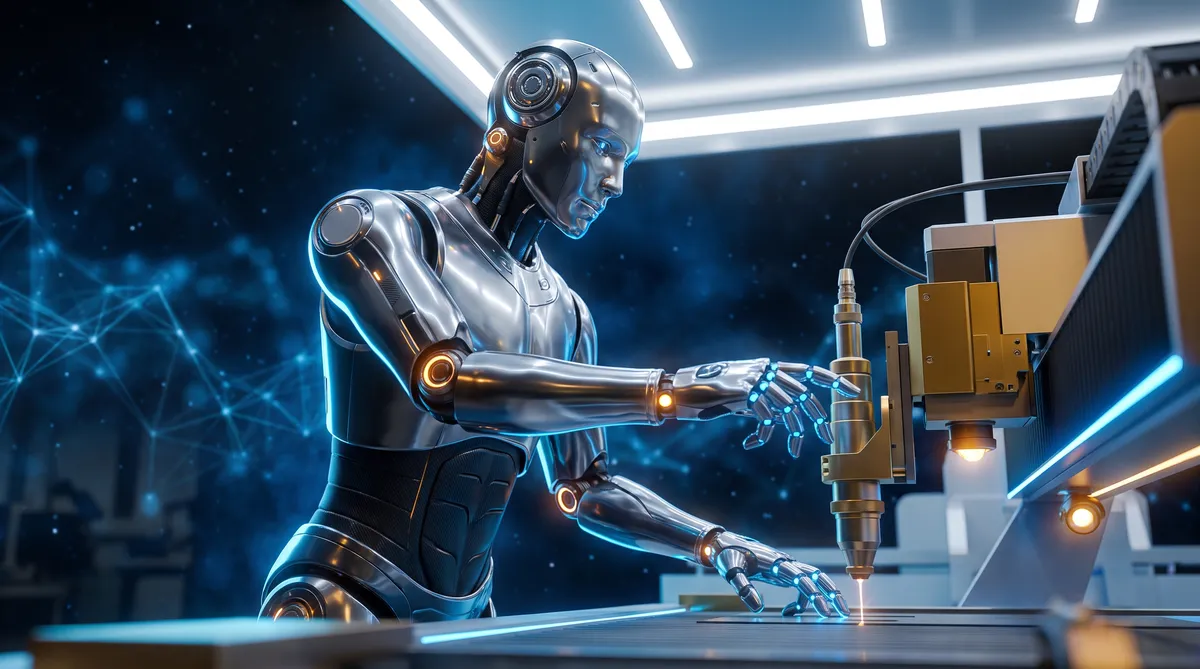
The factory floor is where the real evidence lives. BMW announced it will deploy humanoid robots in production in Germany for the first time, with a pilot at the Leipzig plant running from summer 2026 (BMW Group press, February 2026). Note the word pilot: the world’s most advanced manufacturers are still in the validation phase, not fleet rollout. I keep a running account of these deployments in my post on humanoid robots in manufacturing.
Capability is bought with training data, and the published numbers show how expensive it is. GEN-1, Generalist’s general-purpose robotics model, needed half a million hours of real-world training data to reach 99% success on benchmark tasks (The Robot Report, April 2026). Figure trained its whole-body controller on more than 1,000 hours of human motion data across over 200,000 parallel simulation environments before its public demonstrations (Ars Technica, May 2026). Every skill you see in a demo video sits on top of an investment like that.
Any honest answer to what is a humanoid robot in 2026 also has to include the runtime reality. Most humanoids run 1 to 4 hours per battery charge, well short of a full shift. The current best answer is autonomous battery swapping: UBTech’s Walker S2 exchanges its own battery in about 3 minutes (UBTech product page; CnEVPost, July 17, 2025). At home, the picture is earlier still. Domestic models handle simple fetch, tidy and companionship tasks under close supervision, and the most concrete near-term use case I have found is support for older adults, which I examine in my post on humanoid robots in elderly care.
How Are Humanoid Robots Different From Cobots and Other Robots?
The short version: a cobot is a stationary arm certified to share a workspace with people, while a humanoid is a mobile, full-body machine that brings its own locomotion and manipulation everywhere it goes. A cobot bolts to a bench and does one task in one place extremely well. A humanoid is designed to move between tasks and workstations the way a human worker does.
That difference cuts both ways. Cobots are a mature technology with two decades of standards work, predictable integration costs and well-understood safety cases. Humanoids are the opposite on every count: young, expensive to integrate and still waiting for their own dedicated safety standard. If you are weighing the two for a specific line, my humanoid versus cobot comparison works through the decision factor by factor, and my collaborative robots guide covers the cobot side on its own terms.
Against the rest of the robot family the line is simpler. Traditional industrial arms are faster and stronger than any humanoid but work behind fences on fixed tasks. Autonomous mobile robots move materials efficiently but cannot manipulate anything a shelf or cart does not hand them. The humanoid’s pitch is generality: one body plan for many tasks, at the price of doing each individual task worse than the specialist machine, at least for now.
Can You Buy a Humanoid Robot Today?
Yes. As of August 2026 my comparison tracks 18 humanoid robots on the market or on pre-order, with manufacturer-published prices running from $4,900 to $90,000. Six of those 18 have no published price at all, which usually signals an enterprise sales process rather than a shop link. The full audited table, with every price traced to a manufacturer source, lives in my post on humanoid robots for sale.
Two market facts should shape any purchase decision. First, roughly 90% of global humanoid shipments in 2025 came from Chinese companies (Omdia, January 2026), so the realistic buying menu is mostly Chinese hardware whether or not the brand name suggests it. Second, prices are falling fast: IDTechEx forecasts a 68% average price decline by 2030, from $114,700 to about $37,000 (IDTechEx, May 2026). If your use case is marginal today, waiting is a legitimate strategy; if it already pays, the early operational learning is worth more than the future discount.
Budget buyers have real options for the first time. The entry segment now starts under $6,000, and I rank what that money actually buys in my affordable humanoid robots buyer’s guide. Just do not confuse an entry-level development platform with a machine that will stock shelves on its own.
Stay ahead of the humanoid robot market
Three briefings a week on deployments, pricing, and safety rules, written for operations leaders who need decisions, not hype. Free, no spam, unsubscribe anytime.
What Rules and Standards Apply to Humanoid Robots?
Humanoid robots currently borrow their safety framework from general industrial robotics while a dedicated standard is written. The core reference is the ISO 10218-1 and ISO 10218-2:2025 revision for industrial robot safety, and the humanoid-specific gap is being addressed by ISO 25785-1, a standard for dynamically stable mobile robots that is still under development. Dynamically stable is the key phrase: a walking robot that loses power can fall over, which classic robot safety standards never had to consider. I map the whole framework in my guide to humanoid robot safety standards.
On the regulatory side, the EU has moved first. Under the AI Act as amended by the Digital Omnibus, transparency obligations apply since 2 August 2026, and high-risk requirements for AI embedded in machinery apply from 2 August 2028 (Hunton Andrews Kurth; Orrick, 2026). Anyone deploying in Europe should read my breakdown of the EU AI Act timeline for humanoid robots, because most robotics coverage still cites deadlines that no longer exist.
My take, after tracking this market daily: the definition at the top of this page will not change, but almost every number in it will. Prices are falling, runtimes are climbing, and the standards are catching up to the hardware. Treat any humanoid robot claim, including mine, as dated the moment it is published, and check the source and the date before you build a business case on it.
Frequently Asked Questions
What is a humanoid robot in simple terms?
A humanoid robot is a machine with a human-like body: a head, a torso, two arms, and either two legs or a wheeled base. It is built that way so it can work in places designed for people and use tools designed for human hands, from factory workstations to kitchen counters.
What is the difference between a humanoid robot and an android?
An android is a humanoid robot designed to look convincingly human, with synthetic skin, a face and lifelike expressions. Industrial and domestic humanoids keep the human body plan for practical compatibility but remain visibly robotic. Every robot in my market comparison is a humanoid; none of them is an android.
How much does a humanoid robot cost?
Manufacturer-published prices run from $4,900 to $90,000 as of August 2026, and 6 of the 18 robots I track publish no price at all. IDTechEx forecasts a 68% average price decline by 2030, from $114,700 to roughly $37,000 (IDTechEx, May 2026). Enterprise flagships are typically quoted through sales processes, not price lists.
Can humanoid robots walk and talk?
Bipedal models walk on two legs, including on stairs and uneven surfaces within limits, and most current platforms carry a conversational voice interface. The practical constraint is energy: most humanoids run 1 to 4 hours per charge, and only a few, such as UBTech’s Walker S2 with its 3-minute autonomous battery swap, can work near-continuously (UBTech; CnEVPost, 2025).
Are humanoid robots in homes yet?
Only at the earliest-adopter stage. Domestic models such as the 1X NEO are shipping, but they handle simple household tasks under supervision rather than running a household. Industrial deployments are years ahead of home use, and I expect that gap to persist through the decade.
Sources
- Omdia, “Humanoid Robot Market Tracker”, January 2026. omdia.com
- IDTechEx, “Humanoid Robots 2026-2036”, May 2026. Report
- BMW Group, “BMW Group to deploy humanoid robots in production in Germany for the first time”, press release, February 27, 2026. Press release
- The Robot Report, Generalist introduces GEN-1 general-purpose model for physical AI, April 2026. therobotreport.com
- Ars Technica, Figure AI whole-body controller training data, May 20, 2026. arstechnica.com
- UBTech, Walker S2 product page; CnEVPost, UBTech shows how its humanoid robot can work 24/7 with autonomous battery swap, July 17, 2025. cnevpost.com
- ISO 10218-1:2025, Robotics, Safety requirements, Part 1: Industrial robots. iso.org
- ISO/WD 25785-1, safety requirements for dynamically stable industrial mobile robots, under development. iso.org
- Hunton Andrews Kurth, “EU Digital Omnibus on AI Enters Into Force”, 2026. Article
- Orrick, “EU AI Act Update: Digital Omnibus Finalizes 8 Compliance Changes”, July 2026. Insight
Last verified August 15, 2026. Price and availability figures come from the TARFT comparison table, audited against manufacturer sources in August 2026.

Ulrich Baldauf is the founder of There’s A Robot For That, covering humanoid robotics for manufacturing and industrial operations. He has tracked the humanoid robot sector since 2024, with a focus on safety standards (ISO 10218, EU Machinery Regulation 2023/1230) and what deployments mean for operations and EHS teams. Connect on LinkedIn: linkedin.com/in/ubaldauf