

TrendForce forecasts global humanoid robot shipments will breach 50,000 units in 2026, a 700% surge over the previous year. The industry jumped from niche research to mass production in roughly 18 months. This guide covers every major manufacturer, their flagship models, pricing, specifications, and commercial availability status, verified through July 2026, with every price rechecked on the maker’s own pages on 3 October 2026.
Key Takeaways
- More than 140 humanoid robot companies operate globally in 2026. China accounted for more than 80% of global installations in 2025 through manufacturers like Unitree (5,500 units sold) and AgiBot (5,168 units), according to Counterpoint Research and Rest of World.
- Manufacturer-published prices run from $4,900 (Unitree R1 AIR) to an estimated EUR 98,000 (Neura 4NE1 Gen 3.5). Figure, Boston Dynamics and Agility publish no purchase price for Figure 03, Atlas or Digit and sell by quote.
- The global market reached $4-6 billion in 2026 and is growing at 39-45% CAGR toward $13-15 billion by 2028-2030.
- 2026 marks the first year walking robots ship to consumer homes, with 1X NEO preorders underway and Neura’s 4NE1 Mini expected later in 2026.
- At least 10 companies now have platforms in commercial deployment or active pilot programs.
Table of Contents
Which Humanoid Robot Company Actually Leads in 2026?
It depends on what you measure, and the two honest answers point at different companies.
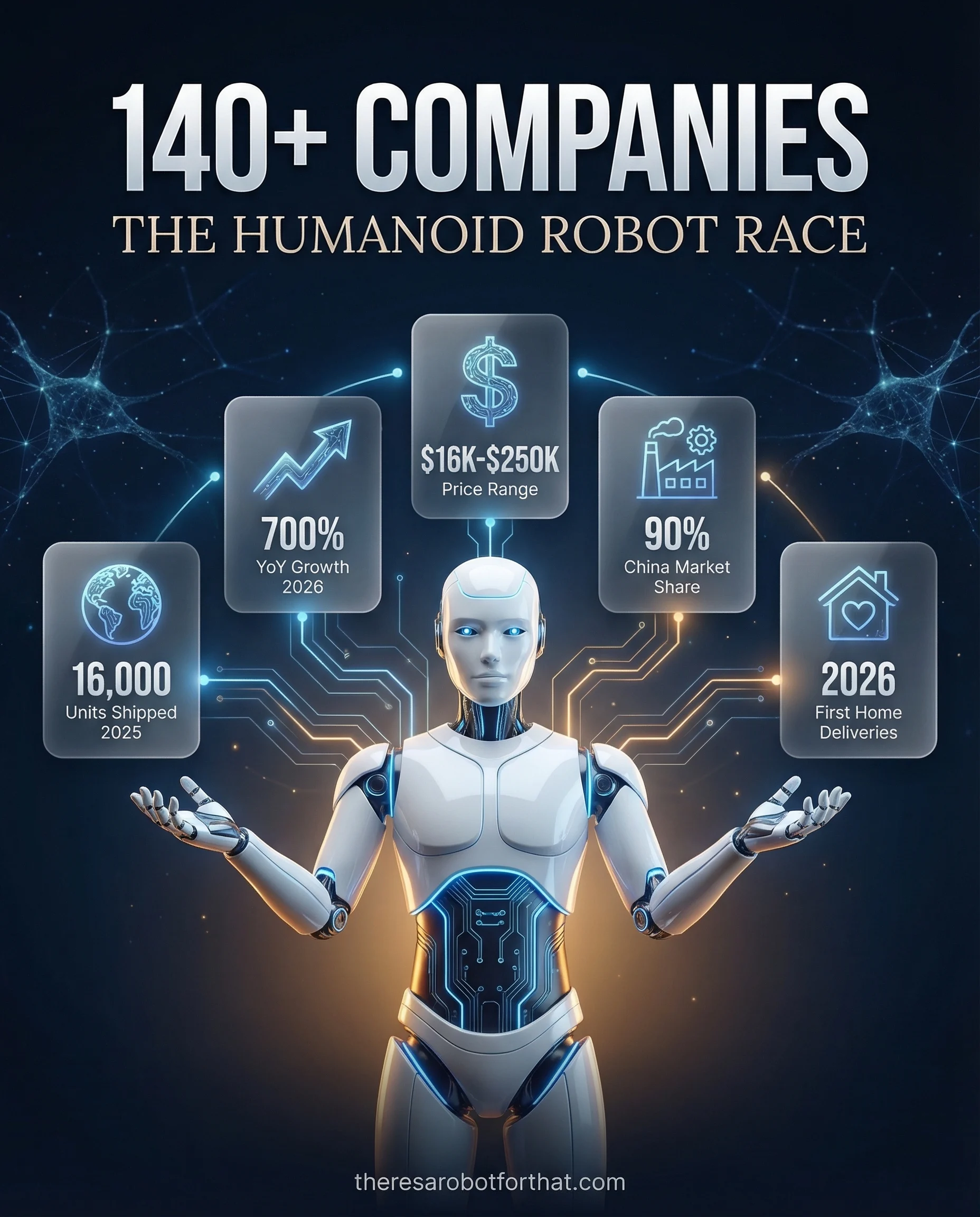
By robots shipped, China leads and it is not close. Unitree sold 5,500 units in 2025 and AgiBot 5,168, out of roughly 16,000 installed worldwide, according to Counterpoint Research. UBTECH produced around 1,000 in the same year. Chinese manufacturers accounted for more than 80 percent of global installations.
By robots actually working for a paying customer, the picture is far thinner, and the best-known names are not the ones in front. The tiers below come from the Humanoid Reality Index, which moves a robot up only when a named customer or arms-length press confirms the deployment. Vendor claims never move a tier. Checked 12 September 2026. Of 56 models on the ladder, exactly two have reached Tier 1:
| Model | Maker | Evidence tier | What that means |
|---|---|---|---|
| Agility Digit | Agility Robotics | Tier 1, Deployed | Customer-confirmed production use, arms-length verified |
| Figure 02 | Figure AI | Tier 1, Deployed | Customer-confirmed production use; the newer Figure 03 has not reached this bar |
| Figure 03 | Figure AI | Tier 2, Piloting | Named customer trial, not yet confirmed production use |
| Apptronik Apollo | Apptronik | Tier 2, Piloting | Named customer trial |
| Tesla Optimus | Tesla | Tier 3, Demoing | Shown in public, no verified customer use on the record |
That gap is the single most useful thing to know before you shortlist a supplier. A robot with a spectacular demo video and a Tier 3 rating has no customer on the record. The full ladder covers 56 models with the dated evidence behind every placement.
How Big Is the Humanoid Robot Market in 2026?
Get the Verified Robot Price & Deployment Table (October 2026)
32 humanoid robots. Every price checked against the maker’s own order page or filing, no aggregator numbers, plus the honest deployment status for each. Free PDF, updated monthly. Enter your email and the download link appears right here.
Market size estimates for 2026 vary by research firm. MarketsandMarkets values the market at $2.92 billion in 2025 with a 39.2% CAGR toward $15.26 billion by 2030. Fortune Business Insights estimates $6.24 billion for 2026, and Mordor Intelligence cites $3.93 billion. Regardless of which estimate you trust, the trajectory points toward $15 billion or more by 2030.
Around 16,000 units were installed worldwide in 2025, according to Counterpoint Research. Asia holds roughly 55% of the market, driven by concentrated production ecosystems in China, Japan, and South Korea. Chinese manufacturers shipped the vast majority of units deployed that year, per DirectIndustry e-Magazine. How the two blocs compare on verified events rather than shipment claims is tracked on the Humanoid Reality Index.
So what’s driving this growth? Use cases break down into three main categories:
- Industrial automation accounts for about 60% of deployments, covering material handling, assembly, quality control, and welding
- Household service makes up roughly 25%, a category that barely existed before 2026
- Research and education fills the remaining 15%, providing platforms for AI research and custom application development
Companies evaluating humanoid readiness should assess infrastructure compatibility before committing capital. The production gap between China and the US highlights how volume manufacturing drives costs down faster than R&D alone. Use the manufacturing readiness scorecard to assess your facility before engaging any vendor.
Which US Companies Build Humanoid Robots?
The US leads in funding and valuation. Figure AI reached a $39 billion valuation after raising $1 billion in September 2025, all in under three years, according to TechCrunch. While Chinese companies dominate production volume, American firms attract massive venture capital for AI-first approaches and premium industrial platforms.
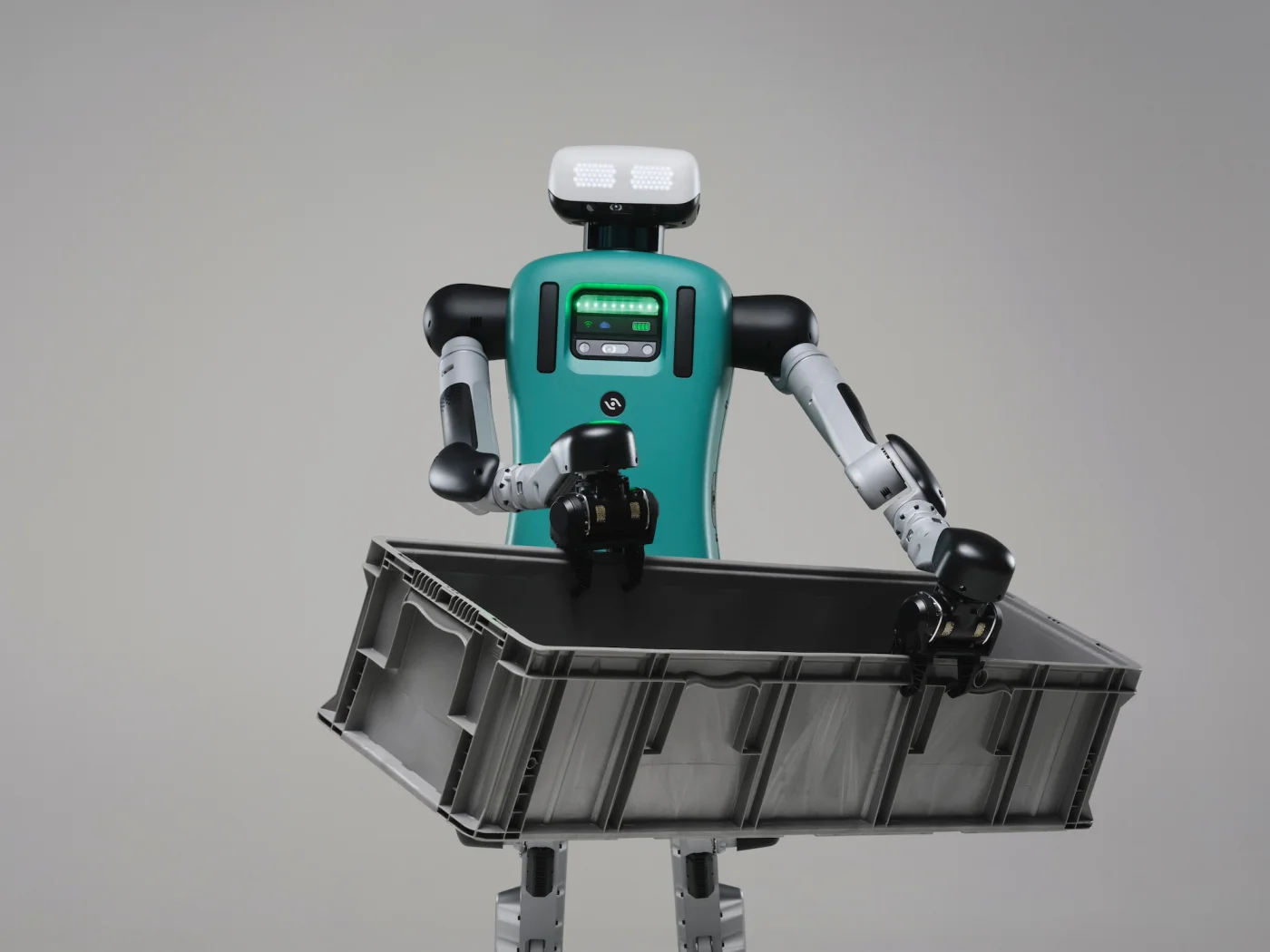
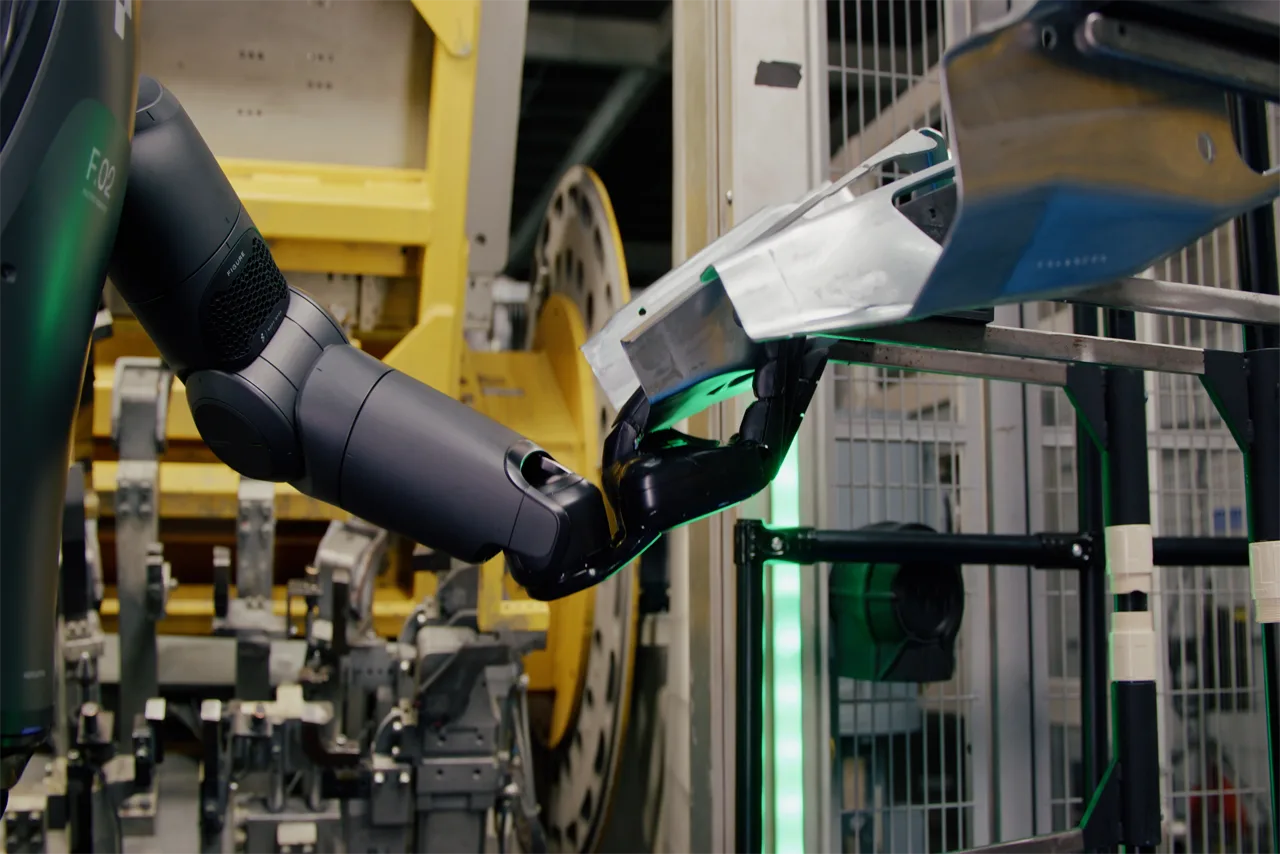
Figure AI leads with the Figure 03, featuring 48+ degrees of freedom, its proprietary Helix AI platform, and dexterous palm-camera manipulation. Figure deployed robots at BMW’s Spartanburg, South Carolina factory in 2025 and opened BotQ mass manufacturing facilities. Figure publishes no price and its site offers only a contact form (checked 3 October 2026), so any figure you see for Figure 03 is someone else’s estimate.
Tesla is preparing Optimus Gen 3 for a Summer 2026 production launch. The robot stands 1.73 meters tall, weighs 57 kilograms, can deadlift 68 kilograms, and carry 20 kilograms dynamically. Tesla’s long-term target is $20,000-$30,000 once production scales, per Not a Tesla App. That is a goal, not a price: Optimus is not for sale. Optimus builds on Tesla’s Full Self-Driving neural networks and Dojo supercomputer infrastructure. For a sourced head-to-head of the two most watched programs, see my Tesla Optimus vs Figure 03 comparison.
On the other hand, Boston Dynamics transitioned Atlas to an all-electric platform with 56 degrees of freedom, a 7.5-foot reach, and 50-kilogram lift capacity. Electric Atlas features 360-degree joint rotation at multiple points and one of the most advanced sensor arrays available: LiDAR, stereo cameras, RGB cameras, and depth sensors working together. It runs about 4 hours on hot-swappable battery packs. Boston Dynamics publishes no price and routes buyers to its sales team (checked 3 October 2026), with initial deployments targeting Hyundai’s Robotics Metaplant and Google DeepMind.
Meanwhile, Agility Robotics runs the first humanoid robot factory in the US. RoboFab in Salem, Oregon has 10,000-unit annual capacity, producing Digit robots for warehouse automation. Amazon deployed Digit in fulfillment centers for material handling and order picking. Agility publishes no purchase price for Digit. Its June 2026 investor presentation, filed with the SEC as Exhibit 99.2, assumes $8,500 a month per Digit for an illustrative robots-as-a-service case, about $100,000 a year. That is a modelling assumption in an investor document, not a quoted rate.
1X Technologies opened preorders for NEO, the first walking robot designed specifically for home use. NEO costs $20,000 upfront or $499 monthly. Preorders opened in early 2026 for household chores, with initial tasks including cleaning, laundry, and basic meal preparation. The platform learns tasks through human guidance and repeated execution.
Can American companies compete with Chinese firms on volume? Probably not yet. But they’re betting that AI sophistication and premium positioning will matter more than unit cost in the long run.
Why Does China Dominate Humanoid Robot Manufacturing?
Chinese manufacturers accounted for more than 80% of all humanoid robots installed globally in 2025, a staggering concentration of production capacity. The ecosystem runs on volume production, aggressive cost optimization, and rapid global expansion.
Unitree Robotics dominates the affordable segment. The G1 costs $13,500 on Unitree’s own store and corporate site, making it one of the cheapest fully-capable walking robots on the market. It features reinforcement learning, performs acrobatic maneuvers, self-recovers from falls, and ships with a developer SDK. Unitree showcased its full lineup at CES 2026, including the G1, H2 industrial variant, and R1 models. The company’s CEO forecasts deliveries of 10,000-20,000 units this year, as reported by Rest of World.
The H1 research model targets universities and labs. Unitree’s own store shows $90,000, but the maker titles that product “contact us for the real price”, so the figure is a ceiling rather than a confirmed price. The larger H2 focuses on industrial applications with enhanced payload and durability.
In second place globally, AgiBot shipped 5,168 units in 2025. The company specializes in industrial and logistics applications, operating primarily in China’s domestic market with 2026 international expansion plans announced.
UBTECH, founded in 2012, is one of China’s oldest robotics firms. Its Walker series targets logistics and manufacturing automation. UBTECH produced roughly 1,000 units in 2025 and maintains partnerships with major Chinese manufacturers.
Similarly, Fourier Intelligence specializes in healthcare and rehabilitation. Their platforms assist with patient mobility, rehab exercises, and elder care, differentiating Fourier from the industrial-heavy Chinese market.
Additionally, LimX Dynamics released the Oli full-sized platform in Summer 2025, emphasizing dynamic locomotion and balance control for complex terrain.
Why can Chinese manufacturers sell at these prices? Concentrated supply chains, government subsidies, volume manufacturing, and lower labor costs create a cost structure that Western competitors struggle to match. Additional emerging players include Engine AI, Noetix Robotics, X-Humanoid (Beijing Humanoid Robot Innovation Centre), Galbot, RobotEra, Kepler, Astribot, and XPENG.
Japanese and European Manufacturers
In contrast to the volume-driven Chinese market, Japan focuses on precision components rather than complete platforms, while European startups differentiate through design aesthetics, AI platforms, and flexible pricing models. It’s a strategic split: Japan builds high barriers to entry in the component supply chain, and European companies carve out niches that neither Chinese scale nor American AI can easily replicate.
To start with Japan, Kawasaki Heavy Industries revealed its Kaleido 9 at the iREX 2025 exhibition in Tokyo. Kaleido 9 lifts 30-kilogram loads, learns to operate cleaning tools, and supports VR remote control for disaster response. Kawasaki’s roadmap spans decades: simple factory tasks by 2030, complex assembly by 2040, and full disaster response beyond 2040.
Harmonic Drive operates as a component supplier rather than a complete manufacturer. The company presented optimized reducer designs specifically for humanoid joints, including flat, high-torque reducers for arms and ultra-compact models for fingers. Japan’s dominance in precision manufacturing creates dependency relationships across the global supply chain.
Honda discontinued ASIMO development in 2018, making its last active appearance in March 2022. Honda’s exit represents Japan’s broader shift toward enabling technologies rather than complete platforms.
Turning to Europe, Neura Robotics (Germany) opened preorders for the 4NE-1 Gen 3.5 featuring Porsche-designed aesthetics, patent-pending artificial skin that detects objects before physical contact, and an NVIDIA Thor T5000 processor with water cooling, according to Neura Robotics. The Gen 3.5 stands 180 centimeters tall, lifts 100 kilograms, walks at 5 km/h, and carries an estimated price of EUR 98,000 per unit for 1-19 units, or EUR 60,000 for 20 units or more, excluding taxes and shipping, with a refundable EUR 100 reservation and availability expected at the end of 2026 (Neura reservation page, checked 3 October 2026). The 4NE-1 Mini variant (132cm, 36kg, 25 DOF, 3kg payload) is listed at an estimated EUR 19,999 for the Standard and EUR 29,999 for the Pro with dexterous hands, expected in 2026 (Neura).
Neura’s Neuraverse fleet-learning OS lets robots share learned skills across deployments. Can European design innovation match Chinese scale? That remains the central question for the continent’s robotics ambitions.
Humanoid UK debuted HMND 01 Alpha at CES 2026, the UK’s first industrial walking robot. Built in just seven months (the fastest development cycle on record), it comes in wheeled (220cm, 7.2 km/h, 15kg payload) and bipedal (179cm, 90kg, up to 2 m/s) variants, per Autonomy Global and Humanoid. Humanoid publishes no price for either version and offers an Early Access sign-up instead (checked 3 October 2026). Humanoid UK offers a Robots-as-a-Service model with claimed labor cost savings up to 50%.
Engineered Arts produces Ameca, an expressive humanoid focused on research and entertainment. Engineered Arts publishes no price for it: the Ameca specs page offers a customized quote and a rental option in place of a figure, checked 26 July 2026. Figures around $250,000 circulate in coverage but trace to no source Engineered Arts has published.
How Much Do Humanoid Robots Cost in 2026?
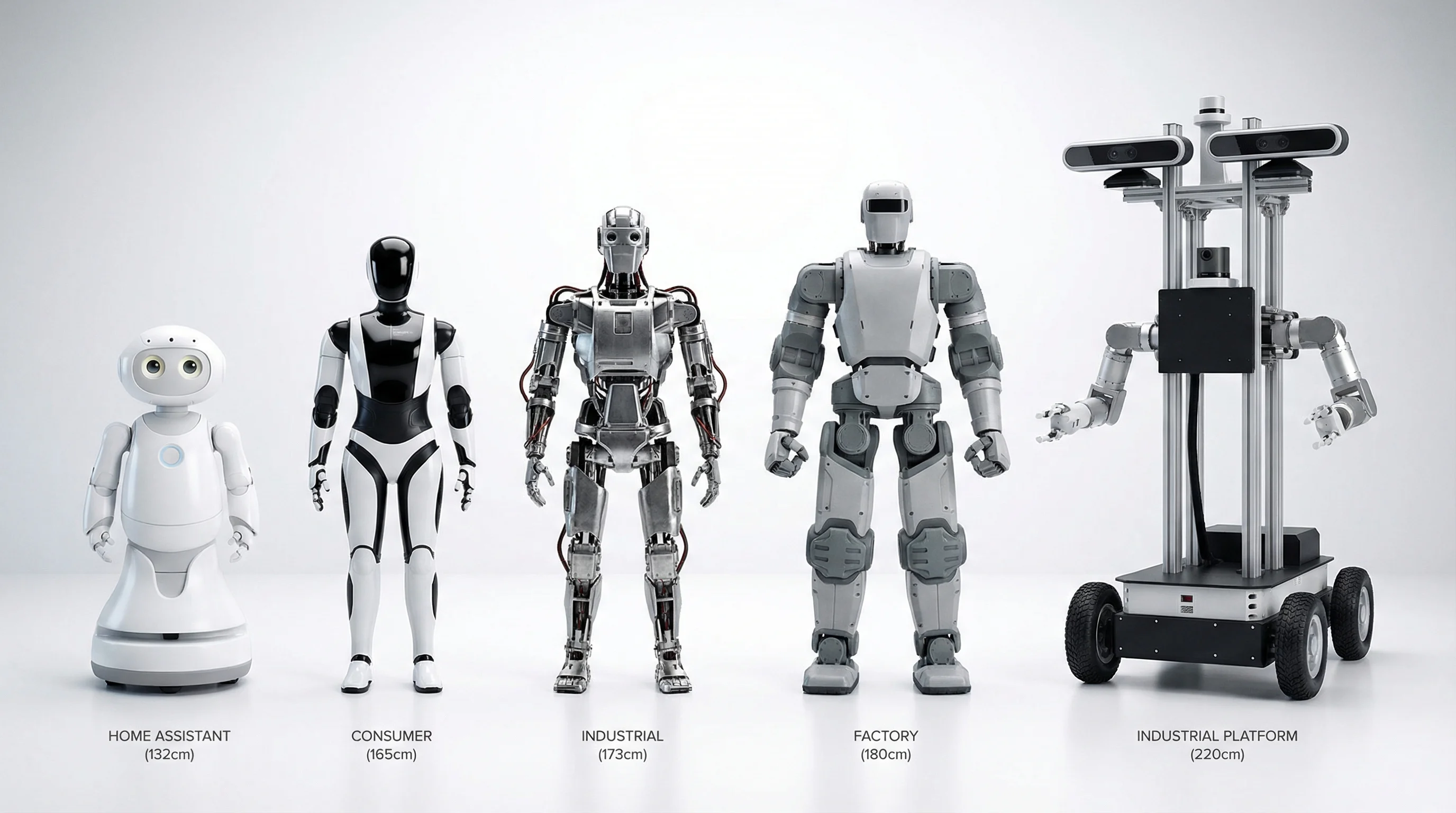
Prices published by the makers themselves run from $4,900 for Unitree’s R1 AIR to an estimated EUR 98,000 for Neura’s 4NE1 Gen 3.5. Unitree’s store also shows $90,000 for the H1 and $100,000 for the H2 Plus, but both pages say to contact sales instead of offering a checkout, so neither is a price you can pay. Above that the picture changes: Boston Dynamics and Agility Robotics publish no purchase price for Atlas or Digit, selling by quote instead, so the six-figure numbers quoted for them elsewhere come from resellers and estimates rather than the makers. For Atlas, my Boston Dynamics Atlas price guide traces each of those figures to its source. Mass production has driven costs down 40-60% compared to 2023-2024 research prototypes, and Neura’s estimated fleet price for 20 or more units is 39% below its single-unit estimate. For a deeper analysis of what you will actually spend across a 3-year horizon including integration and maintenance, see the complete humanoid robot cost and ROI breakdown.
Here’s how the market breaks down:
| Model | Manufacturer | Price | Category |
|---|---|---|---|
| R1 AIR / R1 / R1 EDU | Unitree | $4,900 / $5,900 / $10,500 | Educational |
| G1 | Unitree | $13,500 | Entry-level |
| 4NE-1 Mini (Standard / Pro) | Neura Robotics | EUR 19,999 / 29,999 (est.) | Compact commercial |
| NEO | 1X Technologies | $20,000 or $499/month | Consumer / home |
| Optimus Gen 3 | Tesla | $20-30K target, not for sale | Consumer / home |
| 4NE-1 Gen 3.5 (20+ units) | Neura Robotics | EUR 60,000 (est.) | Commercial fleet |
| H1 | Unitree | Contact sales | Research |
| 4NE-1 Gen 3.5 (1-19 units) | Neura Robotics | EUR 98,000 (est.) | Premium commercial |
| HMND 01 Alpha | Humanoid UK | No published price | Premium industrial |
| Digit | Agility Robotics | No published price | Premium industrial |
| Atlas (electric) | Boston Dynamics | No published price | Premium industrial |
Prices as published on each maker’s own pages, checked 3 October 2026. Neura’s figures are its own estimates excluding taxes and shipping; at the ECB reference rate of 1.1225 USD per euro (2 October 2026), EUR 19,999 is about $22,400 and EUR 98,000 about $110,000. Unitree’s store lists the H1 at $90,000 but titles it “Contact us for the real price”. A target is not a price.
Key price drivers include:
- Manufacturing scale: Chinese volume production creates 40-60% cost advantages
- AI platform complexity: NVIDIA Thor processors and custom neural networks add significant cost
- Payload and durability: Industrial-grade mechanics cost more than consumer-grade components
- Sensor sophistication: LiDAR, depth cameras, and artificial skin push prices up
- Design aesthetics: Partnerships like Neura’s Porsche collaboration command premium positioning
But which tier actually offers the best value? Above the sub-$30K tier, published prices thin out fast: Neura’s estimated EUR 60,000 to EUR 98,000 for the 4NE1 Gen 3.5 is the only full-size industrial humanoid here with a maker-published figure, and everything else sells by quote. Home buyers face a trickier calculation, since the sub-$30K models are still quite limited in what they can do autonomously.
How Do Humanoid Robot Specs Compare?
Modern bipedal platforms feature anywhere from 25 to 56 degrees of freedom, stand 1.32 to 2.2 meters tall, weigh 36 to 90 kilograms, and run 2.5 to 6 hours on battery. The right specs depend entirely on the use case. Does more degrees of freedom always mean better? Not necessarily. A warehouse robot needs payload capacity and runtime, not acrobatic flexibility.
| Model | DOF | Height | Weight | Payload | Battery | Speed |
|---|---|---|---|---|---|---|
| Neura Mini | 25 | 132 cm | 36 kg | 3 kg | 2.5 hr | N/A |
| HMND 01 (bipedal) | 29 | 179 cm | 90 kg | 15 kg | 4 hr | 7.2 km/h |
| Tesla Optimus | N/A | 173 cm | 57 kg | 20 kg | N/A | N/A |
| Figure 03 | 48+ | N/A | N/A | N/A | N/A | N/A |
| Atlas (electric) | 56 | N/A | N/A | 50 kg | 4 hr | N/A |
| Neura 4NE-1 Gen 3.5 | N/A | 180 cm | N/A | 100 kg | N/A | 5 km/h |
| HMND 01 (wheeled) | 29 | 220 cm | 300 kg | 15 kg | 4 hr | 7.2 km/h |
| Kaleido 9 | N/A | N/A | N/A | 30 kg | N/A | N/A |
A few standout specs worth highlighting:
- Highest payload: Neura 4NE-1 Gen 3.5 lifts 100 kg, the most of any commercial platform
- Most degrees of freedom: Atlas at 56 DOF enables complex acrobatic movements and precision assembly
- Fastest speed: HMND 01 wheeled variant reaches 7.2 km/h, ideal for large warehouse environments
- Most compact: Neura Mini at 132 cm and 36 kg fits into home environments without dominating the room
- Most advanced sensors: Atlas combines LiDAR, stereo cameras, RGB, and depth sensors, while Neura’s artificial skin detects objects before physical contact
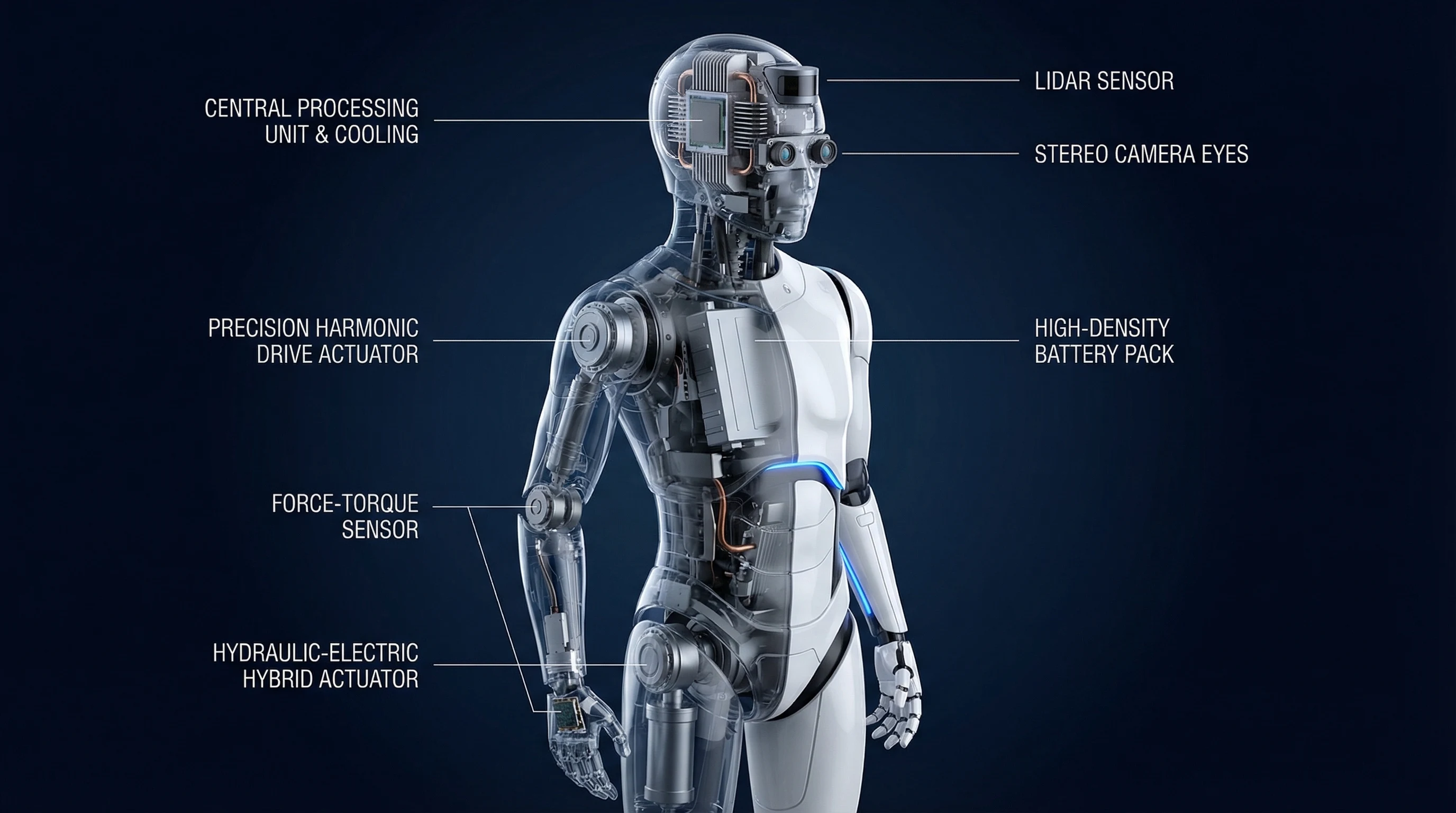
Unique differentiators include Neura’s water-cooling system for the NVIDIA Thor processor, HMND’s interchangeable hands (swap between five-finger dexterous hands and parallel grippers), and Boston Dynamics’ hot-swappable battery packs for continuous industrial operation.
Which Are the Most Advanced Humanoid Robots in 2026?
Figure 03 holds the strongest claim to “most advanced” in 2026, with active factory deployment at BMW’s Spartanburg plant, 48+ degrees of freedom, and the Helix AI platform for continuous fleet learning. But “most advanced” depends on your criteria. By mechanical sophistication, Boston Dynamics Atlas leads. By AI integration depth, Tesla Optimus draws from a neural network stack trained on millions of real-world miles.
Figure 03 pioneered commercial deployment at scale. The Helix AI platform learns from demonstrations and improves continuously through fleet data sharing. Palm-camera manipulation gives precise visual feedback for dexterous tasks. BMW’s Spartanburg deployment validates industrial readiness in a way no demo reel can. BotQ manufacturing facilities position Figure for volume production in late 2026.
Boston Dynamics Electric Atlas features the most sophisticated mechanical design in the industry. Its 360-degree joint rotation enables movements that human-mimicking designs simply can’t replicate. The comprehensive sensor array creates environmental awareness approaching biological levels. Hyundai and Google DeepMind deployments push the research frontier forward.
Tesla Optimus Gen 3 extends Tesla’s automotive AI stack, including Full Self-Driving neural networks proven across millions of vehicle miles. The Dojo supercomputer provides massive training capacity for learning from simulated environments. Tesla’s vertical integration, designing its own chips, training its own AI, and manufacturing at scale, creates potential cost advantages once production ramps.
How do you even define “most advanced” in this fast-moving market? The answer depends on whether you prioritize deployment track record, raw mechanical capability, or AI sophistication. In our view, real-world factory deployment separates marketing promises from proven capability.
Unitree G1 delivers the best value proposition at its price point. Reinforcement learning enables continuous skill acquisition. Acrobatic demonstrations, including kung fu and backflip routines, showcase genuinely impressive dynamic control. Self-recovery from falls proves robustness that matters outside the lab.
Agility Robotics Digit achieved commercial-scale deployment faster than most competitors. Amazon warehouse pilots across multiple fulfillment centers prove the logistics economics work. RoboFab’s 10,000-unit capacity enables fleet deployments. The bipedal design navigates stairs and uneven surfaces that wheeled robots simply can’t handle.
Which Humanoid Robots Can You Actually Buy Today?
At least 10 companies now have robots in commercial deployment or active pilot programs, making 2026 the first year these machines ship to consumer homes. From our tracking of manufacturer announcements and delivery reports, the gap between “announced” and “shipping at scale” remains wide. What separates real deployments from marketing promises? Actual customer deliveries. For a full guide to pricing, availability, and where to purchase, see humanoid robots for sale in 2026. Manufacturers who find a figure of theirs wrong on this site can correct it from a verified company domain, at no cost.
Actively shipping:
- Unitree G1, H1, and R1 ship globally, with the company reporting 5,500 units delivered in 2025
- 1X NEO opened home preorders in early 2026 ($20,000 or $499/month), as covered by Fortune
- Agility Digit operates in Amazon fulfillment centers with expanding deployments
- Neura 4NE-1 Mini takes reservations, with availability expected in 2026 (not yet shipping, per Neura)
Pilot deployments with paying customers:
- Figure 03 operates at BMW Spartanburg handling assembly tasks
- Atlas deployed to Hyundai Robotics Metaplant and Google DeepMind
- Digit expanding beyond Amazon to automotive and logistics partners
- Common pilot program challenges include power infrastructure upgrades, system integration, and the safety documentation buyers must prepare before a robot goes live on the floor
Preorders open, deliveries pending:
- Tesla Optimus Gen 3 targeting Summer 2026 limited pilots
- Neura 4NE-1 Gen 3.5 accepting preorders for late 2026
- HMND 01 Alpha wheeled variant targeting Q3 2026
Most platforms exist in quantities of dozens or low hundreds. Only Unitree, AgiBot, and UBTECH ship thousands. The home delivery milestone matters less for volume than for psychological validation: walking robots are transitioning from industrial equipment to consumer products.
Where Are Humanoid Robots Being Used?
Industrial automation accounts for roughly 60% of deployments, followed by household service at 25% and research or education at 15%, per DirectIndustry e-Magazine. The use case dictates every design tradeoff. Where are these robots actually working right now?
Manufacturing:
- Material handling between workstations and machine loading
- Assembly requiring dexterous manipulation for fitting components
- Quality control inspection via computer vision
- Machine tending for CNC and press operations
- Comparing humanoids to collaborative robots reveals distinct strengths for each approach
Warehousing and logistics:
- Order picking across warehouse aisles
- Package sorting and routing to correct destinations
- Truck loading and unloading, where the humanoid form factor fits truck beds naturally
- Agility Digit’s Amazon deployments demonstrate ROI under 2 years for high-volume facilities
Home service (new in 2026):
- Household chores: laundry, dishwashing, basic cleaning
- Elderly care: mobility assistance, medication reminders, companionship
- Meal preparation remains limited to simple tasks like microwaving and pouring
- 1X NEO and Neura Mini target this emerging consumer market
Healthcare:
- Patient lifting and mobility support
- Guided rehabilitation exercises
- Fall prevention and health monitoring
- Medical applications require higher safety certifications than industrial deployments
Research and education:
- University AI research and reinforcement learning experiments
- Human-robot interaction studies
- Developer SDKs from Unitree and others enable custom application development
What Does the Future Hold for Humanoid Robots?
Industry analysts project the market will reach $13-15 billion by 2028-2030, according to TrendForce and MarketsandMarkets. That trajectory depends on three things: manufacturing scale-up, AI capability leaps, and regulatory clarity for workplace safety, which the ISO 10218:2025 safety standard now anchors for industrial deployments. Understanding how humanoid robots work at a technical level helps operations leaders evaluate which platforms are truly ready for production and which are still solving fundamental engineering problems.
Foundation models are the reason training data has become the scarcest resource in humanoid robotics. GEN-1 needed half a million hours of real world training data to reach 99% benchmark task success (The Robot Report, April 2026). Figure trained its whole body controller on over 1,000 hours of human motion data across more than 200,000 parallel simulation environments before its package sorting demonstrations (Ars Technica, May 2026). And Leju Robotics documented in April 2026 that a single deployed robot generates roughly 4 hours of usable training data per day, which turns every deployed fleet into a data collection network.
First and foremost, price compression will continue as production scales. Chinese producers keep pushing global prices down. Neura’s fleet pricing already demonstrates that business model innovation matters as much as hardware costs. Will mass production actually drive prices below $15,000? No maker has published a path to that level yet. Tesla’s own long-term Optimus target is $20,000 to $30,000, and Agility’s investor presentation puts the build cost of its current Digit at about $125,000 (SEC Exhibit 99.2), a cost figure, not a price.
At the same time, AI capabilities are improving through foundation model integration. Large language models let robots accept verbal instructions. Multi-modal AI processes visual, audio, and tactile inputs simultaneously. Reinforcement learning from fleet data accelerates skill acquisition across every deployment. The AI capability gap between leading platforms and commodity robots is widening, not shrinking.
Beyond the factory floor, home market growth represents the largest opportunity and the biggest uncertainty. The technology reached consumer availability in 2026, but actual adoption stays limited. Capabilities need to expand well beyond today’s limited task sets. Success looks like dishwashers and washing machines: appliances that genuinely save labor, not novelties gathering dust.
Regional dynamics are intensifying. China maintains cost leadership. The US leads in valuation, AI platforms, and premium positioning. Japan controls critical components. Europe differentiates through design and business model flexibility. Each region plays to its strengths, creating a complex global market rather than a winner-take-all outcome.
Frequently Asked Questions
What companies make humanoid robots?
More than 140 companies manufacture these robots globally in 2026. Major players include Tesla (Optimus), Figure AI (Figure 03), Boston Dynamics (Atlas), Agility Robotics (Digit), Unitree (G1/H1), AgiBot, UBTECH, 1X Technologies (NEO), Neura Robotics (4NE-1), Humanoid UK (HMND 01 Alpha), and Kawasaki (Kaleido 9). Chinese firms accounted for more than 80% of global installations in 2025, according to Counterpoint Research. The market splits along regional strengths: US companies lead in funding and AI platforms, with Figure AI reaching a $39 billion valuation in September 2025. Japan concentrates on precision components through suppliers like Harmonic Drive, while European firms such as Neura Robotics and Humanoid UK differentiate through design and flexible pricing. Emerging Chinese players include Engine AI, Galbot, Kepler, and XPENG.
How much does a humanoid robot cost?
Manufacturer-published prices range from $4,900 for the Unitree R1 AIR to an estimated EUR 98,000 for the Neura 4NE1 Gen 3.5. Premium industrial platforms like Atlas, Digit and Figure 03 carry no published purchase price and are sold by quote; Agility’s investor presentation models Digit at $8,500 per month as an illustrative assumption, not a quoted rate. Consumer options like 1X NEO run $20,000 upfront or $499 monthly. Tesla targets $20,000-$30,000 for Optimus once production scales, a goal rather than a price. Neura’s estimated fleet price is 39% below its single-unit estimate. At the bottom, Unitree sells the R1 in three versions: $4,900 for the R1 AIR, $5,900 for the R1 and $10,500 for the R1 EDU, the only one that supports secondary development. Mass production has pushed costs down 40 to 60 percent compared with 2023-2024 research prototypes. Key price drivers include manufacturing scale, AI platform complexity, payload and durability requirements, and sensor sophistication. Above $30,000, Neura’s 4NE1 Gen 3.5 is the only full-size industrial humanoid with a maker-published figure; the rest sell by quote.
What is the most advanced humanoid robot in 2026?
It depends on the criteria. Figure 03 leads in real-world factory deployment, with active operations at BMW’s Spartanburg plant and the Helix AI platform for continuous learning. Boston Dynamics Atlas has the most sophisticated mechanical design (56 DOF, 360-degree joints) and sensor array. Tesla Optimus Gen 3 uses Full Self-Driving neural networks and Dojo supercomputer training, per Not a Tesla App. Agility Robotics Digit deserves mention for commercial scale, operating in Amazon fulfillment centers with a 10,000-unit annual factory behind it. In our view, real-world deployment track record separates proven capability from marketing promises.
Which country leads humanoid robot production?
China dominates with more than 80% of global installations in 2025. Unitree sold 5,500 units and AgiBot sold 5,168, as reported by TechCrunch and Rest of World. The advantage rests on concentrated supply chains, government subsidies, volume manufacturing, and lower labor costs, a structure Western competitors struggle to match. Asia as a whole holds roughly 55% of the market across China, Japan, and South Korea. The United States counters with capital and AI, with Figure AI reaching a $39 billion valuation after raising $1 billion in September 2025. Only Unitree, AgiBot, and UBTECH currently ship in the thousands.
Are humanoid robots available for home use?
Yes, 2026 is the first year walking robots ship to consumer homes. 1X NEO ($20,000 or $499/month) is on preorder for household chores including cleaning, laundry, and basic meal preparation, as Fortune reported, with US deliveries starting in 2026 according to 1X. Neura’s 4NE-1 Mini is expected in 2026 at an estimated EUR 19,999. Tesla Optimus targets limited consumer availability starting Summer 2026. Current capabilities remain narrow: meal preparation is limited to simple tasks like microwaving and pouring, and household service accounts for only about 25% of deployments. The realistic benchmark is whether these machines save labor the way dishwashers and washing machines do. Sub-$30,000 models are still limited in autonomous operation.
How many humanoid robots were sold in 2025?
Approximately 16,000 units were installed globally in 2025, according to Counterpoint Research. Unitree led with 5,500 units, followed by AgiBot with 5,168. Chinese manufacturers produced the vast majority of all units shipped. Shipments are forecast to exceed 50,000 in 2026, per TrendForce. UBTECH produced roughly 1,000 units the same year. The 2026 forecast represents a roughly 700% surge as the industry moves from niche research to mass production in about 18 months. By use case, industrial automation absorbs about 60% of deployments, household service roughly 25%, and research or education the remaining 15%. Most platforms still exist in quantities of dozens or low hundreds; only Unitree, AgiBot, and UBTECH ship in the thousands.
What is the cheapest humanoid robot you can buy?
The Unitree G1 is among the cheapest fully-capable models at $13,500, the price listed on Unitree’s own store. It features reinforcement learning, acrobatic movement capabilities, self-recovery from falls, and a developer SDK. The cheapest humanoid with a maker-published price is the Unitree R1 AIR at $4,900 (R1 $5,900, R1 EDU $10,500), but the R1 line lacks the autonomy and manipulation capability needed for real-world applications. The next affordable tiers include the Neura 4NE-1 Mini at an estimated EUR 19,999, expected in 2026, and the 1X NEO at $20,000 for home use. Unitree’s pricing reflects China’s concentrated supply chains and volume manufacturing; the company’s CEO forecasts deliveries of 10,000 to 20,000 units this year, per Rest of World. For research labs, Unitree’s store shows $90,000 for the H1, but titles that product “Contact us for the real price” and offers no checkout, so the figure is not a price you can pay.
Who makes the Tesla Optimus robot?
Tesla designs and manufactures Optimus in-house, built by the same team behind Tesla vehicles and AI systems. Optimus Gen 3 targets a Summer 2026 production launch, applying Tesla’s Full Self-Driving neural networks and Dojo supercomputer, as reported by Not a Tesla App. Tesla’s long-term target is $20,000-$30,000 at production scale, a goal rather than a price. Tesla’s decision to retire Model S and X to fund Optimus signals how central the robot program has become to the company’s strategy. The robot stands 1.73 meters tall, weighs 57 kilograms, can deadlift 68 kilograms, and carries 20 kilograms dynamically, positioning Optimus in the consumer and light-industrial tier.
Sources
- Counterpoint Research via South China Morning Post. (2026). China Dominates Global Humanoid Robot Market.
- Autonomy Global. (2026). UK’s First Humanoid Robot for Industrial Use at CES 2026.
- TechCrunch. (2025). Figure Reaches $39B Valuation in Latest Funding Round.
- DirectIndustry e-Magazine. (2025). China Humanoid Robots Market.
- Fortune. (2026). Humanoid Robot for Home Chores.
- Fortune Business Insights. (2026). Humanoid Robots Market.
- Not a Tesla App. (2026). Tesla’s Robotic Moonshot: Optimus Gen 3.
- MarketsandMarkets. (2026). Humanoid Robot Market Report.
- Mordor Intelligence. (2026). Humanoids Market.
- Neura Robotics. (2026). 4NE-1 Product Page.
- Rest of World. (2026). China Humanoid Robots: Unitree, AgiBot, Tesla Optimus.
- TechCrunch. (2026). Why China’s Humanoid Robot Industry Is Winning.
- TrendForce. (2025). Humanoid Robot Shipment Forecast.

Ulrich Baldauf is the founder of There’s A Robot For That, covering humanoid robotics for manufacturing and industrial operations. He has tracked the humanoid robot sector since 2024, with a focus on safety standards (ISO 10218, EU Machinery Regulation 2023/1230) and what deployments mean for operations and EHS teams. Connect on LinkedIn: linkedin.com/in/ubaldauf